Afghan Star
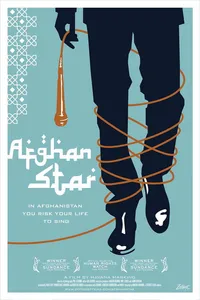
“Afghan Star” documents the third season of the scrap-iron indie version of the kind of show that introduced the world to William Hung, the Asian guy who sang the horrible version of a horrible Ricky Martin song, and Susan Boyle, the British lady who sang a great version of a great “Les Miserables” song.
But in Afghanistan, this show is not light fare.
Take the finale performance of 22-year-old Setara Hussainzada, who, after being voted fourth, shrugs off her headscarf and dances as she sings. Her means are shocking, but she speaks for all the show’s fans when she explains: “I wanted to lift the heaviness from my heart.”
She’s by far the most compelling among fellow finalists Lema Sahar, 25, (under government protection at the end of the film, despite her conservative performances), Hameed Sakhizada, 20, and Rafi Naabzada, 19, dreamy as a soap-opera star but sort of sickeningly willing to join in the criticism of Setara. Of course, when you consider that music and dancing were banned when Rafi (who speaks passionately about “taking people’s hands from weapons to music”) was 8, it makes a little bit more sense.
When about a third of the country watched the show’s finale, millions simultaneously grabbed a rung on the ladder towards being a sensible, rational, modern part of the modern world. Kabul and Herat, Mazar-E-Sharif and Kandahar aren’t just the targets of military strikes and suicide bombs — residents there are hooking up televisions to car batteries, delicately wiring satellite hookups on their roof and dressing up their Barbie dolls in pretend versions of the final round of the singing competition. Even host Daoud Sedigi is a first-class rebel, once risking death by operating a hidden and illegal TV-repair shop behind the back of the Taliban. Sedigi reminds us that just because something is a law doesn’t make it right — and just because something is pop trash on the surface doesn’t mean it can’t be mightier than the cowardice of tyranny.
Much of the joy of this movie is in showing how the show enrages the humorless, anti-woman religious crowd still struggling to plunge the country into the dark ages. The hardcore Ullema council foams and spits over Setara. One can only imagine how they would howl if they saw the young female fan of the show — the one with the Barbies — dancing with a pink, floppy short skirt, which she knows could get her shot, or bragging to the camera that she will not wear a head scarf because she is not afraid of the Taliban.
If our highest, noblest ambitions in Afghanistan are to be realized, we need to build schools, work with poor poppy-farmers, enlist female Marines to connect with protected, rural village women and children. But after you see Setara dance, one can’t help thinking that, when it comes to hitting violent extremists where it hurts, a drone-dropped, laser-guided smart bomb is positively medieval compared to the potential impact of a Lady Gaga tour.
Ashley O’Dell reviews movies that aren’t in theaters anymore.