Black Swan
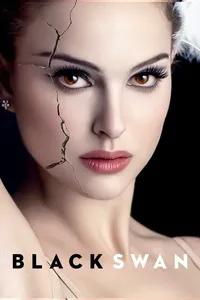
It’s telling that all of the over-the-top praise for a Natalie Portman movie about a ballerina performing in “Swan Lake” - at least the kudos I’ve heard - have come from young men. (Want to see 260,000 examples of girls who like it? Google “Black Swan” “thinspiration.”)
“Black Swan” is the most anti-woman “chick flick” I can think of in recent years - and I’ve sat through “Illegal Aliens” with Anna Nicole Smith and most episodes of “America’s Next Top Model.” If you had to imagine a Lifetime movie written by four dudes (and directed by Darren Aronofsky, of the glorious “The Wrestler,” the uncomfortable “Pi,” the speed-jitteringly dead-on-balls accurate “Requiem For a Dream” and “The Fountain,” which I couldn’t get past minute 11 of) “Black Swan” would probably be it. It’s a movie where the lead actress, seeing her predecessor (a vicious, “aging” drunk played by Winona Ryder) fling herself into traffic rather than deal with the bullshit of haute ballet, decides to make worse decisions. It’s a movie where the girl dubbed her competition, Lily, played by Mila Kunis (the brunette ditz from “That 70’s Show”) is only competition because, while she doesn’t study as hard or perform as well, she lets her hair down while pirouetting and acts like a casual, giggling, club girl.
Oh, “Black Swan” is a beautiful, haunting, well done movie. It’s easy to get lost in it, to flinch when Natalie Portman’s skeletal star ballerina Nina Sayers agonizes over her performance, then discovers the bleeding fingernails she’s overlooked during practice … and accidentally tears her cuticle in a bright red line of blood down the middle of her finger. But the movie is also incredibly enraging, a solid brick wall I wanted to beat my fists against by the fantasy murder/real suicide at the end.
“Done to death, I know,” says Nina’s beak-faced creep of a director, played by Vincent Cassel, of the choice of ballet. “But not like this.” Is that true of the movie at large?
In between “Black Swan“‘s masturbation fantasy and the lesbian fantasy and the suicide, it is soft-focus bulimia and rape-sploitation - albeit really smoothly done. Nina just wants to transcend, to dump the stuffed animals that fill her room in her mom’s (the creepily clingy Barbara Hershey) apartment down the building’s incinerator, to leave behind the pink butterfly wallpaper and ballerina music box and the doors without locks. But her protestations against that life might as well be those of a teacup chihuahua. Nina’s a pet. She can’t survive on her own. Watch the movie without thinking, and it’s a sexy, spooky, champagne-fluted ride to the top of every girl’s ballerina fantasy - complete with starvation, self-mutilation, paranoia, hallucinations and an ecstasy-fueled night of black-out club sex, which Nina enjoys with knitted brow. (Note: It is nice to see Portman out-and-out emoting, after three soporific “Star Wars” prequels she went through as though her soul had been Botoxed.)
There’s plenty of potential for stories about sexy dancers coming into their own, whether as camp, like “Flashdance,” or schmaltz like “Dirty Dancing,” or self-parody, like “Bring It On.” “Black Swan” isn’t that kind of story though.
It’s a story about a girl who is trapped, who is strong in all the wrong ways, whose dreams provide her no escape, who confuses checking out of life with transcendence. It would be nice for Portman’s character to find some strength in what she’s doing, like Mickey Rourke’s character in “The Wrestler.” Part of what made Randy “The Ram” Robinson’s story so awesome was that, in the end, while he decided to destroy himself, he did it with a showman’s grace and a warrior’s strength. When Portman’s character decides how she will end her fantastic performance of “Swan Lake,” she does so like a victim.
Ashley O’Dell writes about movies that aren’t in the theater anymore, unless she is provided with advance review copies, in which case, she watches those.