Bubble
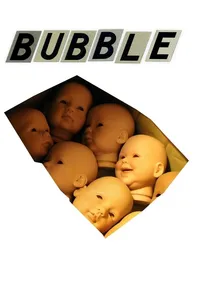
Here’s what happens in “Bubble”: There’s a middle-aged lady, Martha, who takes care of her elderly father at home and works at a doll-making factory in rural Ohio. Co-worker Kyle is a high school drop-out who lives with his mom, in a house whose overhead light is as bright as the sun (a nice amateur mistake from a team led by Steven freaking Soderbergh). Kyle leans on Martha for rides to work and to his second job at the shovel factory, but they have sort of a friendship. Everyone has the kind of conversations you wouldn’t listen in on if you were sitting at the next table over, in dialog that sounds like it came out of a sleep-walking Ambien addict.
“Bubble”: Less fun than making dolls in a beat-down factory town day after day after day after day A large order comes in and the plant boss hires Rose, a younger single mom and fellow drop-out. Martha is instantly captious — but only a little, since actors in “Bubble” were seemingly told to react with the range of vinyl siding. After a few days, Rose hires Martha for a night of babysitting and it turns out Kyle’s taking her on a date. After the date, in Kyle’s room, Martha goes through his drawers and takes a wad of money. Back at her apartment, her baby’s father shows up and accuses her of previously going to his house and stealing money and marijuana. A screaming match ensues. He leaves.
- “I steal to stay awake.”*
People sit on formica benches at fast food restaurants, or in car seats, or on couches in front of TVs, without dialog and frequently just Robert Pollard noodling and strumming three chords on a guitar, over and over, which is apparently too cool for reproach because he used to be in Guided By Voices and he’s from Ohio, so he “gets” this whole thing in ways we don’t. This fills up time and takes us nowhere.
In the remaining half-hour, some especially stiff police officers show up and we learn Rose has been strangled to death; while no actors were used for the movie and the dialog was improvised, these guys seem especially uncomfortable with the gig. A detective informs the characters of what we already know. Under questioning, they recount the same story we’ve just seen, so we can hear their mumbling stories a third time. As the detective drives around, the camera focuses on his face going in and out of the shadows behind the steering wheel, which might look semi-artistic were the ratio not about 90 percent total pitch darkness to 10 percent dirty-window clarity. Anyway, Rose is fingerprinted, charged with murder, and jailed. You’d think the news of an acquaintance being murdered and another being arrested for it would jangle some of the people in the town, but they react with the same emotion you might display when you realize a not-very-good coupon for something you didn’t really want anyway has expired.
Nothing can shield your eyes from the boring.
“Bubble” is the cinematic equivalent of turning in a 10 page college term paper with extra spacing, large margins and a too-big font for padding. And that’s not fair to college kids — I know twenty-somethings in film school who would never turn in a project this boring, this uninteresting, this poorly scored, with such inattention paid to sound and light. Soderbergh should know better. New writer Coleman Hough, from her interviews, sounded like she was more interested in playing field trip and having “fun” instead of crafting any kind of story (Hough wrote in a scene where Rose, in her second job as a cleaning woman, takes a bath at her employer’s empty house because Hough used to do that at parties — the perfect pinnacle of disgusting, rude and boring).
At the end, Martha wanly remembers standing over Rose’s body, but we only spent seven minutes wondering if she was being wrongly charged anyway. Usually, this would be called a spoiler, and I’d avoid doing it, except it doesn’t spoil anything. If you want to spend 73 minutes staring at something this boring, go take a long bath.
Ashley O’Dell reviews movies that aren’t in the theater anymore. She lives in North Hollywood, near the In-N-Out Burger.