Casino Royale
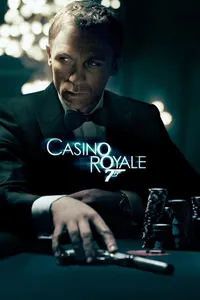
“Casino Royale,” number 21 in the multi-billion-dollar franchise, is easily the best James Bond movie since Sean Connery’s take on the secret agent. Thank goodness it followed in the footsteps of last year’s
reboot of the Batman series, “Batman Begins,” which rid itself of the gaudy trappings of Gotham City, the Glowstick Circus Capital of the World, instead of in the footsteps of other, classics-ruining prequels, like, oh, I don’t know, Star Wars…
Craig’s Bond, in the telling of how Bond became a 007, is lickably delicious, trashing himself in pursuit of a bomber in a Ugandan construction site, and flinging himself throughout a historic Venecian palazzo collapsing into the Grand Canal (one quibble: a nail gun, used in that scene’s fight sequence, that magically functions without its pneumatic hose!). And so utterly fine-tuned is he in his element as a
special agent that it’s a testament to every female around him (except Judi Dench, reprising her role as M., his boss, who is made of tougher stuff than that) that their knees don’t buckle in his presence.
For a story 54 years old, “Casino Royale” both holds up and updates remarkably well. There’s no dust to be brushed off this story — it seems more innovative and self-aware than the vast majority of movies
today. Cellphones and other technology fit in well, while communism has become terrorism and baccarat, Texas Hold-Em. The Aston Martin remains — a 1964, it has only become vintage.
Both Craig and leading lady Eva Green (Vesper Lynd) are magnificent enough to make a movie-length single shot of them flossing their teeth riveting. When rudely confused for a valet in an early scene, Craig fluidly takes the keys tossed at him and simply smashes the jerk’s Range Rover into a crowd of other pretentious vehicles. And when he meets Lynd in a subsequent scene, they dissect each other and cleverly provide exposition in a scene that takes the so-called “sex appeal” of the typical cinematic hitting of sheets after caveman-like conversation and shows it for what it is: amateur porn. The scene is
possibly the gem of the movie.
Bond tells Lynd she “overcompensates by wearing slightly masculine clothing and being more aggressive than her female colleagues, which gives her a somewhat prickly demeanor and, ironically, makes her less likely to be accepted and promoted by her male superiors, who mistake her insecurity for arrogance. I would normally have said only child, but by the way you ignored the quip about your name and your parents I would go with orphan?”
Lynd responds in kind. “By the cut of your suit you went to Oxford or wherever and actually think human beings dress like that. But you wear it with such disdain, that my guess is you didn’t come from money and all your school chums rubbed that in your face every day, which means you were at that school by the grace of someone else’s charity, hence the chip on your shoulder. And since your first thought about me ran to orphan, that what I’d say you are. sees a slight reaction. Oh you are. And it makes sense since [British Secret Intelligence unit] MI6 looks for maladjusted young men who’d give little thought to sacrificing others in others to protect queen and country. You know former SAS types with easy smiles and expensive watches … it wouldn’t be a stretch to imagine that you think of women as disposable pleasures rather than meaningful pursuits, so as charming as you are, I will be keeping my eye on our government’s money and off your perfectly formed arse.”
“You noticed,” Bond says.
“Even accountants have imaginations. How was your lamb?” Lynd replies.
“Skewered,” says Bond. “One sympathizes.”
As for Mads Mikkelsen, the pouty, asthmatic villain LeChiffre who weeps blood, he is spectacularly vile and heartless and witty all in one package. In his first scene, he is asked by a fellow criminal involved in a shady transaction of a huge sum if he believes in God. “No,” he says. “I believe in a reasonable rate of return.” His best scene, though, is the inevitable hero-capture, which usually involves
elaborate torture and the explanation of the vast criminal plan. LeChiffre knows this, and, in an infamous scene, uses a seatless chair and a carpetbeater to cringing ends (although a naked Bond, of course, in sadistic, absurdist Tyler Durden form, comes out on top).
But it is, by far, Craig who brings a brilliant, bloody reality to the recent Ken doll specter of the Bond character. He has spectacularly destroyed the one-dimensional careless playboy Bond, instead reinventing the agent as a half-monk half-hitman instrument of dry humor and perfection capable of smashing a porcelain wall of sinks in with a man’s face, ending a high-speed chase by rolling his vehicle a full seven times, and ordering the perfect martini. And while Brosnan was comfortable playing “shaken, not stirred” like he was starring in a wristwatch commercial, Craig’s portrayal is deeper in every way, down to the precise ingredients of that drink: “Three measures Gordon’s [gin], one of vodka, half of [bitter French wine] Kina Lillet. Shake it over ice, then add a thin slice of lemon peel.” In a switch, he orders his second of the film’s two martinis after a poor game of poker and a near-death poisoning; the barman asks him if he’d like it shaken or stirred, and he grumbles “Do I look like I give a damn?”
In recent years the James Bond had become so campy you expected Pierce Brosnan to bust out with “Kumbaya.” Thank goodness it’s salvaged itself with a well deserved reboot, away from naughty, back to noir. Bring on number 22 — and as many more as we can get.
Ashley O’Dell reviews movies that aren’t in the theater anymore.