Chapter 27
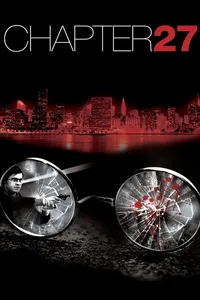
Jared Leto gained a ghastly 67 pounds and took on a far heavier burden to get inside the head of Mark David Chapman in the long-delayed, boycotted-by-many “Chapter 27,” a creeping, creepy ride inside the head of the narcissistic sociopath who got his long sought-after fame by figuring out a way to hurt most of the world with four bullets in the back of one of his idols.
Leto’s performance in first-time writer/director Jarrett Schaefer’s production is something to respect — here’s a teen heartthrob who transforms himself into a greasy, pale, pudgy attention-hound with a whisper-thin child’s voice, trudging around in bad white clunky sneakers and bad, big, 1980s child molester glasses. Leto accurately describes the end result of the movie as a “claustrophobic” experience in Chapman’s head, arriving in New York City and waiting around to meet — and ultimately assassinate — John Lennon. But as he says of the work, “I would never do it again.” Likewise, I would never watch this again.
Like a child, Chapman collects icons — a postcard of Dorothy comforting the Cowardly Lion, a copy of “Double Fantasy,” Lennon’s latest album, and a copy of “Catcher In the Rye,” which he internalized and perverted much as Charles Manson had a decade earlier with the Beatles’ “Helter Skelter.” The title of the movie is a reference to “Catcher,” whose 26 chapters Chapman’s voiceovers appropriate and pervert into a message just for him.
The problem with “Chapter 27” is the problem with giving Chapman, who is still in prison, more of his own platform. He already had a book written about him (the movie is based on it), from hundreds of hours of interviews Chapman gave in Attica. Chapman was then interviewed, in 1992, by Larry King to promote the book. In that interview, in that book, in this movie, he’s calling the shots. That’s what happens with his kind of mentally ill person who does not operate on the same level as us — we think we’re having an understandable conversation with them and they’re talking in pure code. He’s dragging us around with blindfolds on our eyes. We get all of the overlapping voices in his head and none of the pathology behind it.
There’s also the matter of the actor who plays the hardly-seen Lennon. His name? Mark Lindsay Chapman. Nothing against the actor, but in an already Chapman-heavy movie, it seems needlessly insensitive.
Oh, and there’s Lindsay Lohan. She plays Jude, an unbelievably naive fellow Lennon fan who befriends an obviously creepy Chapman and — MAKEUP! — comes off most of the time looking more bedraggled and greasy than him. She seems like she has to be a fictional creation, to flesh out the movie, but apparently she was real. Her character makes no sense and it feels like she knows it. There’s no reason for anyone to give Chapman the time of day the way he comes off in this movie, yet she consents to a restaurant date and invites him to the movies.
This girl wouldn’t make it 10 minutes on the mean streets of Boise. Jude does have a tongue-in-cheek line (about “Rosemary’s Baby,” which was filmed in the Dakota) that would appear to refer to “Chapter 27”: “It’s a very slow movie. Nothing happens until the end.” But actually, nothing happens at the end here, either. The inevitable shooting happens, then a bunch of old news footage of the crowds mourning Lennon. Those tired shots seem more full of life than the interminable journey we’ve just seen, which ends with a bright-eyed Chapman, a born-again Christian, we’re told, well taken care of in prison.
It seems Chapman’s been useful there, as a case study for the Secret Service. The workings of his mind might have — might still — be able to prevent the actions of future aspiring killers. In that sense, he’s probably better off not having been put to death by the state.
However, as Lennon’s widow Yoko Ono has said firmly and repeatedly since the 1980 killing, we should forget Chapman’s name. We should not forgive him. And we shouldn’t give him something he’d approve of. A movie about Chapman isn’t automatically going to be bad — it just has to be done a different way.
Ashley O’Dell reviews movies that aren’t in theaters anymore.