Double Indemnity
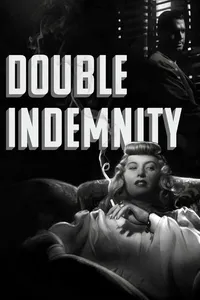
Reasons you won’t like “Double Indemnity”: The smarty-pants title. The average person doesn’t know what it means. It refers to insurance payouts. The subject matter. It’s about insurance. No drier life-and-death subject exists. Might as well make it about the Taft-Hartley labor management act. Or some invasive desert herb, like buffelgrass. Try and make that sexy. It’s old. Surely the movies in theaters this weekend, like the saccarine “Water for Elephants,” in which that mopey dude from “Twilight” seduces Reese Witherspoon, to the amusement of old-timey carneys, or the groundbreaking “Prom,” in which teenagers agonize over what is surely the defining moment of any young person’s life — an overpriced, overheated school dance in a hotel ballroom where teenagers sneakily obliterate themselves on 4Loco so that they can enjoy simulating anal sex through $500 Jovani dresses. It’s black and white! Because the high-resolution color work is really why you’re going to go see Vin Diesel’s guns-a-blazing, tires-a-squealing “Fast Five.”
Let’s obliterate those. Call it “Kill Your Husband For A Fat Payout From An Industry of Twisted Hopes And Crooked Dreams.” That’s what James M. Cain’s story’s about, as sewer-filty as as “a slice of railroad speed,” as bloody real a subject as any ripped from “Law & Order” or “CSI,” but starring sexier people with swankier clothing and wittier dialog. It’s 1938, and the scent of Los Angeles rain and honeysuckle is so thick in the smoke-stained air it tastes like rum.
“I killed Dietrichson,” goes Fred MacMurray’s confession at the beginning of the movie, as he sits with a Dictaphone and a bullet in his shoulder in a dark office. “Me, Walter Neff, insurance agent, 35 years old, unmarried, no visible scars — Until a little while ago, that is. Yes, I killed him. I killed him for money — and a woman — and I didn’t get the money and I didn’t get the woman. Pretty, isn’t it?”
The woman is Barbara Stanwyck, who could give the sun-baked Botox pincushions of today a few lessons about how to stay calm and concentrate on the details that really drive men wild, like tiny anklets tinkling down sweeping stairwells and well chosen words about their own captivity.
“I don’t want to kill him,” says Stanwyck, as Phyllis Dietrichson, wife of the soon-to-be dead man in the voiceover. “I never did. Not even when he gets drunk and slaps my face … The other night we drove home from a party. He was drunk again. When we got into the garage he just sat there with his head on the steering wheel and the motor still running. And I thought what it would be like if I didn’t switch it off, just closed the garage door and left him there.”
Neff is smitten, smitten with a plan that would be crazy if it were just as Phyllis said. Only it’s not. She’s not as lonely as she said. She’s not as non-violent as she said, either. And his closeness to the insurance industry that should fund her escape might help her create an air-tight case, were it not for the way conspiracies almost always are, as easily toppled as pyramids of tinned peas in a Depression-era grocery. You can have the best planned murder in the world and it won’t matter if you accidentally preen in a black, lace-draped mourning hat two days before your husband dies.
“It’s beginning to come apart at the seams already,” mulls Neff’s boss, played by Edward G. Robinson. “A murder’s never perfect. It always comes apart sooner or later. And when two people are involved it’s usually sooner … They think it’s twice as safe because there are two of them. But it’s not twice as safe. It’s ten times twice as dangerous. They’ve committed a murder and that’s not like taking a trolley ride together where each one can get off at a different stop. They’re stuck with each other. They’ve got to ride all the way to the end of the line. And it’s a one-way trip, and the last stop is the cemetery.”
Raymond Chandler and Billy Wilder’s masterpiece is so hard-boiled it scorches the pan, so noir the shadows deserve their own credit, a story about housecalls and traffic signals marked by open flame, a time when normal, rebellious teenage Los Angeles girls could rent Hollywood apartments for nothing, when men with naughty intentions and natty fedoras could take unimpeded romantic walks in the woods behind the Hollywood Bowl, followed up with a beer on a window tray at a drive-up burger joint.
Pretty, isn’t it?
That don’t tell the half of it.
Ashley O’Dell reviews movies that aren’t in theaters anymore.