Fish Tank
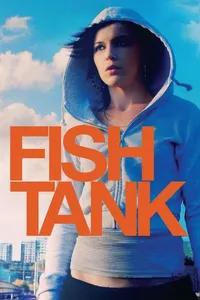
The title of “Fish Tank” is easily the least interesting and most predictable thing about British writer/director Andrea Arnold’s biting, bittersweet look at the life of a 15-year-old aspiring hip hop dancer with little more than a scowl, a 20-quid tracksuit, a wiry body topped by thin dark hair, a cheap nylon black-string backpack and a no-name MP3 player.
Oh, you might think that you’ve seen this plot arc before, the story of a 15-year-old who can’t quite toughen her skin fast enough for her world, with a liberal sprinkling of working-class, gritty elements of “8 Mile” on top? She head-butts girls her age, screams hurtful words at her mother, dreams of dancing in even sub-par music videos.
That’s like saying you’ve seen the dorm room poster of Starry Night — no need to see the real thing, the texture of the oil sculpted into manic, topographic brushwork at MOMA in New York, eh?
You might well be able to make a reasonable guess about where “Fish Tank” will end up. But you’d have better luck trying to guess the path of a curveball.
So what’s our plucky heroine faced with in the two hours we make her acquaintance?
It’s daylight, your early-30s mom is dressed like a tramp and has invited half the apartment complex over to listen to booming reggae. You’re not shocked though — you’re just scheming about how to get the get the bottle of cheap vodka the girl being pawed at on your kitchen counter has just set down. You’re just 15, after all. If you can drink, you can forget about that emaciated horse chained up outside the trailer you pass every day on foot.
It’s a boring afternoon, your single-digit-age sister is passing a cigarette with her friend, drinking from a tall can of lager and swearing as comfortably as George Carlin. She’s just irritating, with her stupid interest in tanning outside the council estate, a perfect little budding copy of your mum. You take another slug or 10 from your green plastic bottle of cider, and review the hip hop dance moves you’ve been working on in an abandoned flat, from cheap, tiny speakers for your generic MP3 player. Your break dancing might be better, stronger, if you drank less and could tear your eyes away from the world on the horizon, which, while not glittering, is at the very least Not Where You Are Now. It could be Wales, for all your care. It’s somewhere else.
It’s nighttime, and, passed out, your mom’s new boyfriend — a young fella, maybe 10 years older than you — carries you to your bed as mom, tipsy, passes out in her pink, beaded bedroom. He lays you down on your bed, undoes your shoes with a father’s tenderness and, this is where your vision gets slow-motion, undoes your ubiquitous track pants, tugs them around your birdlike, tiny, androgynous hips. You smirk, confident in your power from behind your not-quite-closed eyes, forearm draped over your forehead. The smirk fades when you realize he’s just making you comfortable to pull up your blankets and leave the room. You resolve then to follow him — to his work, to his home, into a muddy river to catch carp, if that’s what the situation requires. He’s a security guard, not a hunky hero, but he is at the very least some kind of embodiment of what you see on the horizon.
The clouds are gathering on the horizon, and you’re in an unfamiliar, grassy suburb filled with men who drive station wagons, well fed women in fur boots and yoga pants, and little girls who are little girls, who dress in sequined princess costumes and zoom obediently back and forth, up and down the sidewalks outside their house. Little girls who, at some point, will have to realize that their peers in elementary school are getting loaded, that their peers in middle school are having sex, and that their peers in high school are paying the bills by stripping on circular formica stages.
No matter where you come from, quiet suburbs or cramped, stripped-to-the boards council estates with porches obscured by sagging ropes of drying clothing, at some point the world will very likely grab you and fling you into the filthy, churning water of the world.
With your forearm over your forehead and a slight smile on your face, you may even think that that’s what you want, that that’s what you can handle, that you can push beyond the terrifying. Because that’s the decision that turns child abandonment into a steely resolve to “party,” even if the party isn’t what you want. That’s the decision that can spin rape into a mutual seduction, if just for now, until you can get on and beyond and to some calm, safe place. That’s the decision that makes the difference between crying about the muddy waters and wading in anyway. Because you know you’re going to get hurt, no matter what you do, and it’s better to have the pain on your terms.
Ashley O’Dell reviews movies that aren’t in theaters anymore.