Harry Potter and the Half-Blood Prince
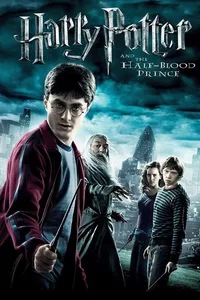
Even as a now-devoted fan of the Harry Potter books and movies, I can still understand how and why I was embarrassed to pick up that first, “The Stand”-sized brick of a book, six years after it was published. Past a certain level of hype, certain kids’ series are suspect even to kids — I never picked up the Sweet Valley Twins in elementary school or got into SpongeBob like other irony-addicted high schoolers.
We are now in the dark days of the world of the “Twilight” books and movies, where sex is evil and stalkers valiant. Gooey, repugnant pornography for the chaste and emotionally stunted. Would that we could wrap it in an invisibility cloak and cast it forever into a vanishing cabinet.
Potter, on the other hand, was well written, its seven books flew by and even if one couldn’t give a fig about the fantasy genre overall, the story — a scrappy, bookish boy with magical powers discovers, at a school to hone those gifts, that he’s responsible for nothing less than saving the world from the forces of evil, wielded by super-baddie Voldemort, that left him an orphan — is as strong as they come. While “Twilight“‘s metaphor substitutes the destruction of sucking blood for the supposed evils of sex, Potter’s metaphor subs in magic for the power of honor and love — familial, romantic and platonic.
The sixth movie released, “Harry Potter and the Half-Blood Prince,” runs two and a half hours, but by the end, you’re psyched for the likely five-hour finale.
There’s plenty of fun (and some believable, not tooth-gritting teenage romance) amid the danger of death and destruction and Big Serious Themes in this penultimate installment. Hogwarts School of Witchcraft and Wizardry students eat beneath floating candles. They drink a delicious concoction of “butter beer” with ginger. The figures in their photographs wave and move. They fly on brooms and learn how to make infatuation potion and liquid luck in class.
Now, the magic of the real world — money — is less reliable than the refined spells of the mysterious “Half-Blood Prince.” Sometimes, you dump millions of dollars on something and the result is an accidental-cat-hair-in-the-polyjuice-potion grade misfire. The money in the Potter films is well spent, but it’s the strength of the story, balanced carefully between biting self-awareness and heart-warming pluck, the actors (previous unknowns like Daniel Radcliffe and Emma Watson prove their stuff against pros like Michael Gambon, Robbie Coltrane and the cold, sneering Alan Rickman) and the brilliance of the translation from page to screen that casts the real spell.
There’s a part in “Half-Blood Prince” where Harry gets to dive into one of his professor’s memories of Voldemort before he was Voldemort (sort of a “Star Wars” prequel arc except that it’s good instead of excruciatingly bad). It’s amazing to ponder and to watch. As Harry leaves the memory, pre-Voldemort’s face dissolves on the bulb end of a bloom of black ink arrowing through water. It’s rare to watch a book adaptation and see how your imagination pales in comparison to what’s on the screen.
The mood could not be more dark, foreboding and tense heading into the last two movies — the final book is being split into a movie released this November and another released next summer. Still, “Half-Blood Prince” is as satisfying as the best-prepared draught of euphoria elixir. Even lacking the last two installments, it’s safe to say that Harry Potter might just be the best book/movie franchise there ever was. (It even has good parodies — Neil Cicierega’s puppet video, That Mysterious Ticking Noise, is ridiculously infectious.)
In the big picture and small details, from a seven-volume plot arc to a few seconds of a tiny dragon roasting chestnuts in a vending machine, it continues to be unexpected and amazing. The whole, giant thing looks effortless and works every time — just like the best magic.
To steal a phrase from Radcliffe’s first, still-in-progress post-Potter movie, “the journey is the destination.” I know how it ends, of course. But I can’t wait to see how the movies turn out.
Ashley O’Dell reviews movies that aren’t in theaters anymore.