Heavenly Creatures
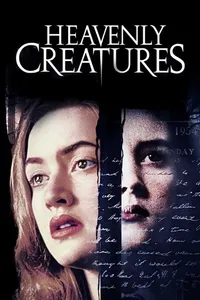
Remember, right before you thought it was cool to leave playing with dolls and fencing with sticks and climbing trees behind forever? When you could run with your best friend laughing and screaming like hyperventilating children away from the Grimm-esque terrors of your imagination?
And do you remember that when it all goes sour, and you grow up? Do you ever revisit that?
Juliet Hulme (Kate Winslet, in her first role) and Pauline Parker (Melanie Lynskey) run and scream toward that precipice in a lovely, terrible terror in “Heavenly Creatures,” a story about two schoolgirls — one too strange to be popular, the other too exotic to care who she befriends in 1952, at the age of 14, in New Zealand.
Kiwi director Peter Jackson (yes, “Lord of the Rings” Peter Jackson) co-wrote the script with his wife, as an adaption of the true story of the two girls, still painstakingly preserved in newspaper scans, the shock of the girls’ ultimate actions still as fresh and bewildering today as it must have been then.
The story begins when Hulme, a ray of sunshine, enters the French classroom where Parker is sulking in the back row, and Hulme cheerfully corrects their teacher on the imperfect subjunctive. In art class, next period, they are paired up together and discover a shared love of drawing knights, unicorns and the epic tenor Mario Lanza. And in gym class, Hulme proudly speaks of being a brave little girl and spending years of bed-bound illness in the Bahamas to cure a respiratory illness — and thrills to Parker’s grotesque scar up her shin, from a childhood bone infection.
“All the best people have bad chests and bone diseases!” Hulme hisses. “It’s all frightfully romantic!”
Do you know what it is to be 14, to still dream about being a damsel in distress at one turn and a blood-spattered survivor at the next? Having three classes together with someone who was on that wavelength was enough to make you think fate had destined you to be best friends. Someone whose mansion you arrive at only to find them spinning in slow motion on a bridge, in princess garb, playing with her little brother as she sprinkles flower petals into the slow river below?
At one point, after nearly being struck by a car, deep in the honeysuckle headiness of their shared delusion, they skip into the woods, strip to their modest underwear as they sing Lanza at top volume. They kiss — a development that, although it must happen miles away from either of their parents, sets reactions in motion and sends an understood shockwave through both their families.
Later that night, as girls on a sleepover do, they lovingly clip handsome movie stars’ photos from a magazine and set them in front of candles, as gods: actors James Mason and Mel Ferrer, Lanza and fellow tenor Jussi Bjoerling. And as they discuss heaven and hell, Hulme, with the same confidence as when she discussed conjugation, informs Parker that she’ll go to neither.
“I’m going to the Fourth World!” Hulme says. “It’s like Heaven, only better because there aren’t any Christians.”
Suddenly, the movie goes over a terrifying rollercoaster plunge as the girls find the thing that all else should be, quite dogmatically, sacrificed for.
In their minds, or at least in the Wonderland part of their minds that is a blossom-filled kingdom of imagination, they are the main characters of the world. Hulme’s father suggests they submit a story to the school paper? Laughable. They will have a book deal waiting in New York when they grow up. They are better than the Medieval peasants around them, who the girls have created out of clay to begin with, and who will do their bidding, their imaginary killing whenever an adult becomes too block-headed or full of bromides.
And what do you do, if you’re a child, dreaming about saving your true love, when the lines between the two worlds blur and you are confronted with the monster preventing that, and can come up with the means to slay it? I mean, it’s all only fantasy and flowers and clay anyway. Isn’t it?
Ashley O’Dell reviews movies that aren’t in theaters anymore.