How To Lose Friends and Alienate People / Choke
Sometimes, an adaptation takes its source material, slashes its veins and soaks your eyeballs in a special extraction of imagination. “Fear and Loathing in Las Vegas,” for instance, or “Godfather” (the first two, anyway).
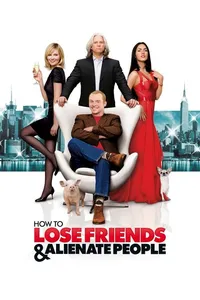
Based on the 2001 memoir of the same name, Toby Young’s “How To Lose Friends and Alienate People,” is not that movie. I’m not just saying that because after failing out of New York City and finding Young’s book on the same, I wrote him a letter (he asked for them, back then). He never wrote back. Had he, I feared, bared his soul for the page but sold it to score more velvet rope?
“How To Lose Friends” follows the Young’s failure to win over Vanity Fair editor Graydon Carter — and all of the Masters of the Universe — through mean wit and charismatic pretension. What do you call a social climber who doesn’t believe he should have to take the stairs?
But Simon Pegg is too nice to play this Young — and Jeff Bridges far too Dude-like to play Carter (that’s like spritzing peroxide on Katie Holmes and asking her to do Anna Wintour). Pegg starts out in a T-shirt reading “Young, Dumb and Full of Come” and acting it. By the end, he’s literally stomping the dark sunglasses of Hollywood and finding joy in a park with an earnest girl in a floral dress. While Pegg convinces, the transformation doesn’t register on the reality scale.
Yes, the real Young did eventually end up married with children, but his story also got totally warped and whitened by the machine he tried in vain to goose. The director banned him from the set while filming; a producer commented drolly to an interviewer that he thought it was “great that people like [Young] still exist.”
It makes little sense when films start with real-life tales of woe and tack on Hollywood endings. Enough people were interested in “How To Lose Friends and Alienate People,” the book, for it to be translated into Croatian. Why the need to also attract the Jamba Juice and “Dancing With the Stars” set? They’re just going to write fan letters — to Simon Pegg’s Toby Young — and find that he doesn’t exist.
The author of 2001’s “Choke,” on the other hand, has an exemplary history of interacting with fans, exchanging personal letters and boxes full of porcelain Jesus night lights, re-light candles, rubber checks, temporary tattoos, diaries, chocolates and handmade name-bead bracelets.
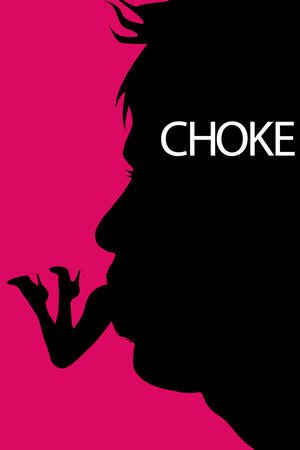
Maybe that had something to do with how good of an adaptation “Choke,” the story of a sex-addicted historical interpreter who fakes choking at restaurants to find benefactors so he can pay for his moonstruck mother’s nursing home, turned out to be. That Chuck Palahniuk wasn’t content to sell the rights, cash his check and be content with crashing the set. That someone would look to him to green-light the great Sam Rockwell as protagonist (if Brad Pitt has Einstein star power, Rockwell is the film world’s Richard Feynman), Angelica Huston (you find another actress who can be as regal playing 40 and 80 at the same time) and leading lady Kelly MacDonald, still as dangerously sexy as when she grabbed Ewan McGregor’s hand in “Trainspotting,” as he walked her to school, and said if he didn’t keep going out with her, she’d tell the police.
“Choke” the movie is no substitute for “Choke” the book — there’s just not enough time to swallow all of Palahniuk’s “One Flew Over the Cuckoo’s Nest” in 89 minutes. But it’s a testament to Palahniuk’s involvement and strength as an author that, if you’re the type who cheered to the end of “Fight Club,” “Choke” elicits the same response — without compromising. “Choke” doesn’t rank on the “Clockwork Orange” scale of adaptations (mostly because of the inevitable comparison to “Fight Club,” which had almost 19 times the budget) but it’s true to its source material and freshly executed by its main players. In adaptations, it ranks near “Godfather” — as long as no one extends it to a trilogy.