Hud
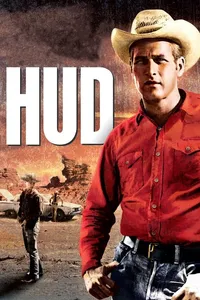
They called Hud “the man with the barbed wire soul” on promo posters for “Hud,” which is really an insult to barbed wire. I’d feel far more comfortable lying down with a prickly spool of barbed wire, would feel less likely to get injured by it and less on my guard around it compared to Paul Newman’s bad, bad boy. Newman’s soul, if he can be said to have a soul, is a delinquent of a soul, made of Thunderbird wine and fertilizer and testosterone.
Just look at how many people’s days he wrecks in the opening moments of the film: a bar owner in one of those Larry McMurtry towns we built the interstates to avoid is sweeping up after a Wednesday night brawl Hud caused. He threatens his nephew Lon (Brandon deWilde, the kid from “Shane,” who died in a car crash at 30 before making it big, as surely he would have) with violence after Lon rousts him from a strange house, on Hud’s father’s orders, then tells the just-arrived man of the house at which he’s sleeping that it’s Lon, not him, who was in there all night with the man’s daughter. When he arrives at the family home, he parks in the flowerbed. “Don’t plant ‘em wear I park,” he barks.
So what’s the problem at home? A cow has died, and the killer is foot and mouth disease. Hud’s father and Lon’s grandfather must oversee the destruction of his livelihood, even as Hud — who thinks the old man should get into oil, an idea he finds totally distasteful and without love — makes a threateningly seductive pitch for the young Lon’s moral future.
It’s a grim scenario, writ large in classic anamorphic widescreen format — you know, films like “Once Upon a Time in the West” that look wide and short to make amazing landscape shots — and cleanly shot with cameras on dolleys and tripods, a rare and welcoming sight in these days of handheld jitter. Some people think handheld cameras are more modern and dynamic, but in many cases, they’re just sloppy and uninspired. You can correct on the fly, so you don’t have to worry about having your actors hit their marks when they’re moving around. You’re either standing or squatting, so you’re not going to be creative with a shot from the floor or the ceiling. Locked-off shots turn a movie like “Hud” into dynamic portraits: closeups of worried faces, wide shots of distressed cattle, horizon to empty horizon filled with dread and frustration.
This isn’t new. But the focus on the horrible Hud, without making the movie bad for a second, is. Especially when they’re played by handsome leading men, we prefer our scoundrels likeable. Brad Pitt’s filthy, dangerous, duplicitous Tyler Durden throws bombs, steals liposuction fat, treats men like monkeys and treats women about as well as his poisoned, urine-soaked home. We wouldn’t like him if we did all that. But if he did it totally joylessly, without a grin, as though he really did want to injure people instead of enlighten them (if the movie were real, you can bet Raymond K. Hessel would be excelling in the veterinary field), we wouldn’t be nearly as willing to hold his hand as skyscrapers fell around us.
It’s Lon, Hud’s foil and scapegoat, his wingman when he wants a flunky, as well as Alma (Patricia Neal, the family’s housekeeper) that we’re really watching this movie for. We’re waiting to see if Lon will be turned into some fatal alibi, if Alma will fall sickeningly for the jerk, or if both will finally assert themselves and spit out the line Hud’s been feeding them. When the sick, drooling cows are led, horribly, into a hastily dug pit lined by solemn men with rifles, is anyone going to stand with Hud and watch the ensuing destruction?
Ashley O’Dell writes about movies that aren’t in theaters anymore.