Julie & Julia
Julia Child’s two-volume set sat behind glass, always within reach in the kitchen of my childhood, its ivory spines — one pale blue, one creamy tomato orange — reading, “Mastering the Art of French Cooking: Child, Bertholle, Beck.”
But for its prominent display, it might as well have been the massive, clumsy juicer relegated to a back cupboard or the Kitchen Aid mixer that came out perhaps a dozen times in 18 years, thanks to my mother’s unfortunate preference for macrobiotic food instead of French cuisine. Would that she’d favored raw-broccoli-and-walnut breakfasts less and crème brulee more.
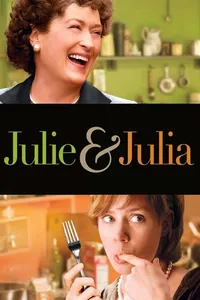
Neither Child nor Julie Powell serve up any vile raw broccoli breakfasts in “Julie & Julia,” a delicious feast of a movie that follows both women on parallel paths discovering cooking — one in mid-century France, one in post-9/11 New York City.
Meryl Streep is enchanting as Child, glumly suggesting, pre-cooking revelation, to her husband (played by the dear Stanley Tucci) that perhaps she could fill her time with hat-making lessons. Amy Adams, as Powell, who blogged her way through Child’s cookbooks as escapism from working for a World Trade Center rebuilding company, earns immediate cheers.
Even if your kitchen is a foreign place where Ramen noodles are occasionally microwaved, both women are heroic and relatable.
A movie about finding solace and an outlet for energy in poaching eggs, boning duck and using endless quantities of butter seems on its surface like it would be doomed to be plodding, ponderous, self-important and out-of-touch. “Julie & Julia” is the opposite of these things. It’s also surprisingly hilarious, as when Tucci walks in on Streep sobbing as she tries to master proper onion-chopping after falling miserably behind in cooking class or when Child is discovered to have likened hot canneloni to something “stiff” and unprintable.
Near the end of the movie, there’s a sad, bitter little coda. The real Child reportedly sniffed at the blog’s propensity toward four-letter words (“I’ll boil the fricken bacon,” Powell writes in an early entry about quiche, discovering the final result to taste “pretty goddamned good.”) and declared the recipe-a-day idea gimmicky.
But Powell, just like Child, was fed up — Child with the inaccessibility of good French cooking to the average American, Powell with the maddening hypocrisies of 2002 (they linger today, if not more insanely elite; consider the economic wreckage that, sensibly, both killed Gourmet magazine and buoyed Campbell’s, simply because it’s hard to beat 26 ounces of chicken and stars for $2.25).
Powell wrote, four days into the blog, “The Victorians served Strawberries Romanoff in December; now we demonstrate our superiority by serving our organic, dewy heirloom strawberries only during the two-week period when they can be picked ripe off the vine at the boutique farm down the road from our Hamptons bungalow. People speak of gleaning the green markets for the freshest this, the thinnest that, the greenest or firmest or softest whatever, as if what they’re doing is a selfless act of consummate care and good taste, rather than the privileged activity of someone who doesn’t have to work for a living … (Child) wants you to know how to make good pastry, and also how to make those canned green beans taste all right. She wants you to remember that you are human, and as such are entitled to that most basic of human rights, the right to eat well and enjoy life. And that, my friends, blows heirloom tomatoes and first-press Umbrian olive oil out of the (effing) water.”
This arrow of truth bursts what could have been a very gimmicky heart — in both the blog and the movie — were the final results not sustenance for Powell and her husband and merely blog-fodder. But I’d argue that cooking one’s way through the blue-diamond-patterned book demonstrates far more respect for the subject matter than observing Child like some pheasant, under glass.
Ashley O’Dell reviews movies that aren’t in theaters anymore.