Marwencol
There’s a fantastic new book out that explores everyday victims of too-often everyday violence, called “Everybody Sees the Ants,” by A.S. King. Lucky Linderman, the grandson of a Vietnam veteran gone missing decades ago, endures a savage beating and discovers he can, somewhat hallucinatorily, see little ants cheering for him — half delusion, half survival mechanism.
The middle-aged Mark Hogancamp doesn’t have ants. He has dolls.
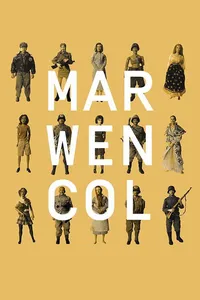
The subject of the documentary “Marwencol,” Hogancamp has an awesome story — an alcoholic cross-dresser, he had his face and memory kicked to pieces in 2000 and when he came out of the coma with most of his mind and motor skills gone, he rebuilt himself by building a small, sprawling World War II-era Belgian town in his backyard, populated with GI Joes and Barbies, with which he could act out the heroic revenge fantasy he could never enact on his real-life attackers.
Cigarette and crummy camera in hand, the taciturn Hogancamp has the rugged good looks and self-deprecating survival instinct of one of the Greatest Generation, except that he has the ability to immerse himself in a 1/6-scale doll world where he’s a crash-landed hero among Nazi baddies like an 11-year-old.
We tour the hangout for dolls called The Ruined Stocking that specializes in catfights. We squint at ant-sized .45 handgun replicas, complete with tiny slides and magazines, and characters that range from a replica of a blonde goddess with whom he’s clearly in love to an aquamarine-haired time-traveling witch straight out of his imagination. We marvel at how Hogancamp is intertwined with his story, not as an omniscient god, but as can’t-wait-for-the-next-episode fan.
“This is what happens to people who mess with us,” he says with a hint of a vengeful smile, when talking about the narrative he’s set in motion.
Because Hogancamp’s story is so strange and compelling, viewers are likely to forgive the missteps of first-time filmmaker Jeff Malmberg. But this is a sloppy film, and one that’s not recognized as such because Malmberg — perhaps unknowingly or because he’s new to this — relies too much on his subject and very little on himself.
Malmberg misses tons of opportunities in “Marwencol,” and leaves too many questions and context unexplored. For one, we don’t even learn until an hour in that Hogancamp was attacked partially because he was a cross-dresser. Malmberg lingers far too long on interviews with the too-pleased editor of a twice-yearly vanity magazine, who clearly feels like a lavish patron of Hogancamp, while neglecting to interview the people who knew Hogancamp before the beating and doctors who might be able to shed some light on what happened to Hogancamp. What does the one-time bride we see in old home movies think of the man who once knew Hogancamp as her husband? Why don’t we hear more from Hogancamp’s best pal, Albert Bodie (who remarks, fittingly, at an exhibition, that when he heard a spectator say, “Let’s go look at pictures of real war,” his reaction was, “This IS Mark’s real war!”) And, although it’s nice he feels mentally safe with a toy Jeep full of heavily armed dolls, why did none of this nation’s safety nets provide therapy for this crime victim?
Yes, it could have been a much finer documentary. But the execution can’t ruin the poignancy of the story, or what it means to anyone who’s ever been a victim, in ways small or big.
You know the phrase “l’esprit de l’escalier”? It means thinking of the perfect comeback minutes or hours after what would have been the perfect time for it. Hogancamp is living out a sort of intricate version of this perfect revenge fantasy. Like Lucky Linderman and his ants, maybe what makes it so wonderfully weird is what makes it work — the fact that Hogancamp knows that to succeed, he has to go back in time.
Ashley O’Dell reviews movies that aren’t in theaters anymore.