Moon
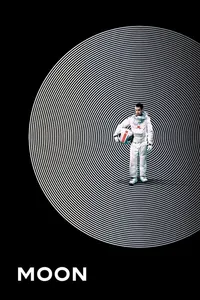
For its almost seven billion inhabitants, Earth can be a damned lonely place. Lack of contact with our fellow carbon-based life-forms can have dire consequences, however, as anyone who’s spent a winter in Maine — especially a winter in Maine on an island where the cold-weather population drops to 350 — can attest.
You could tell the signs of cabin fever during infrequent visits to social hot spots like the grocery store (gotta get that Moxie and Allen’s Coffee Brandy somewhere, eyah?). Inhabitants bundled up like bears, dressed and groomed in a style that can charitably be called “survivalist.” Maneuvering in the cashier’s line or making eye contact required painstaking re-familiarization with one’s own species. But on the frost-heaved roads, each visible passenger would raise a glove and wave when passing a car. Even if you didn’t recognize your neighbor, you were, in a way, desperate for even that little bit of interaction.
“Moon” soaks in that depressing loneliness, that itchy terror of being 75 hours away from not only rescue, but also communication. That’s because solo astronaut Sam Bell, the electrifyingly different Sam Rockwell, who’s deserved this much screen time at least since stealing the show in 1996’s no-budget “Box of Moonlight,” tasked with maintaining the helium-3 harvesters that supply Earth with plentiful, cheap, clean fuel, is burdened by a communications system that’s been knocked out. That can really put a kink in your three-year contract, especially when you’ve got a wife at home, a young daughter who you’ve never seen out of utero and nothing but re-runs of “Bewitched” and a ceiling-hanging, emoticon-faced robot with Kevin Spacey’s voice to warm your lunar bachelor pad. It’s enough to make a man start to go a little bonkers.
Not that Spacey, as robot assistant GERTY, doesn’t do a fine job taking care of the mentally disintegrating Sam Bell as he roams his pod-world, half antiseptic pods, half QVC touches like the Clapper-operated TV. And when a mirage causes Sam to crash his black fuzzy dice-equipped rover, it’s GERTY waking him up in the infirmary, having rescued him. But Sam’s visions only get worse as he nears the end of his three-year contract. He starts thinking he might never get to go home — and there’s something to his suspicion.
No, “Moon” does not fall into the wide and easy well of the massive-gravitied “2001: A Space Odyssey” — sweet, coffee-splashed GERTY (one of his features is a cup holder) knows Asimov’s rules of robotics (protect and obey your humans, and keep yourself safe). It gets weird, but not in a M. Night Shyamalan way. And there’s blood (a little) and explosions (a little) and a bedroom scene (a very short one, in flashback) but what will really creep you out, once you get to it, is Sam’s cheesy “Wake me when it’s quitting time” T-shirt, folded and encased in dry-cleaner’s plastic.
“Moon” hurts, because being a human hurts. Life, knowing that you and the people you love are going to die, hurts. The passage of time hurts. But I found out after seeing “Moon” that it’s intended to be part one of a trilogy and I can’t wait. The end scene prepares us for a whole new world of problems. I also discovered its director, Duncan Jones, is the son of David Bowie.
Sofia Coppola, director of such poor-little-rich-girl dreckitude as “Marie Antoinette” and “Lost in Translation” should take notes. Jones’ “Moon” may take place entirely in the sky, but his story of toiling in solitude is as beautifully grounded — and universal — as they come.
Ashley O’Dell reviews movies that aren’t in theaters anymore.