Only the Lonely
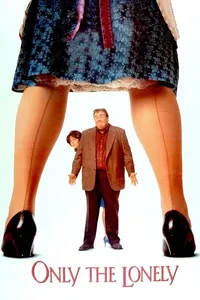
I love Maureen O’Hara (“Miracle on 34th Street” and the mom in “Parent Trap” — the original, good one) and I love Ally Sheedy (her portrayal of a rich girl gone bad forced to confront what her life would be like if she were a servant in “Maid to Order” was in my top 10 childhood movie rental rotation, well before anyone got around to blowing my mind with “The Breakfast Club” at 17). But John Candy? Definitely funny, but he was contained within affable fat-guy territory — Barf the half-man half-dog in “Spaceballs” or a member of the Kenosha Kickers in “Home Alone” or playing John Waters’ drag ingenue Divine as Peter Pan on the stage in a Second City skit. Who knew he could play a leading man in a romantic comedy — and not just a one-note joke about chubbiness?
“Only the Lonely” is the kind of rom com that’s easily dismissed by its title (stolen from the oldies station) and its cover design. Candy, as Chicago policeman Danny Muldoon, shot from between a matron’s gingham dress and seamed stockings, puts his arms out to protect a cowering, dark-haired Sheedy, and shrugs beneath the tag line, “Before he ties the knot, he has to untie the apron strings.” Honestly, you might as well just tag it “straight-to-video, by-the-numbers piece the actors only agreed to because they didn’t hire the highest priced agents in Hollywood — their disgust with the material will ooze out of every scene and they will use their sizeable checks only to buy enough drugs to make them forget the whole, demeaning, Smurfs-movie-like experience.” Which, if you did, you couldn’t be more off.
First of all, my goodness, writer-director Chris Columbus’s opening shot of Chicago in the first crisp blush of fall, as the title track plays passionately and wistfully in the background. The camera floats up over Chicago’s train tracks, pans them, then dips down to a bustling working class street scene of a news stand, a bar-owner sweeping his stoop, a mailman doing his rounds, and Candy, an old fashioned friendly beat cop who knows everyone, coming out of a grocery store with a paper bag.
The camera follows him back down the street we’ve just shown, greeting everyone before he arrives home, with breakfast for his ma — a pastry — and himself — a yogurt. She’s not happy about the yogurt, or about his plans to go to a months-planned baseball game, as the game is on her regular bingo night.
A dream sequence ensues: the fragile, visually impaired O’Hara totters into a monstrous, dark, drippy urban jungle of catwalks and falls immediately into a manhole. Her last words? She hopes her son enjoyed the baseball game.
That loyalty — and the conflicting visions of those around him, like the happy bachelor at the neighborhood bar who will nevertheless die alone or Muldoon’s partner at the PD (Jim Belushi) who wishes he had one more shot at freedom, or Muldoon’s comfortable but suburbs-shackled lawyer brother, who wants his brother to haul Mom off to Florida — are the chains our 38-year-old hero struggles to overcome in his quest to find love, someday, before it’s too late.
The romance is introduced via a meet-cute: Sheedy is the all-in-black daughter of a Sicilian mortician come to the Irish bar to collect a corpse whose friends have brought him for one last Jameson. She and Candy exchange a haunted look, and their clumsy courtship stays that course. There are no cute montages of playing in the autumn leaves or being pushed in the park. She’s an introvert who paints corpses. He’s an overweight cop with more than a decade on her. He even gives her a list of excuses, to make it easy for her to turn him down: “You’re seeing someone else. You’re having your wisdom teeth pulled. You’re washing your hair.” She cracks a smile, and agrees to see him.
At the end of the night, she apologizes for being the awkward one; Candy’s face hardly moves, but you can see his exultation in nearly slow motion writ large in his eyes and his smile. He can’t believe it; somehow, we can. As their relationship progresses, and they have a horrible meeting dinner with his mother (who thinks the Sicilians invented prostitution and the Polish are all idiots), there’s the inevitable frost-heave that fully wrecks the romance alignment.
“Only the Lonely” isn’t just about two quirky people who fall in love against the odds. If it were, it would be as substanceless as the pastry John Candy buys in the opening scene. What it’s really about is regrets — people who end up being sorry after they found love, or sorry they never did, or sorry they took the risk and got hurt because of love.
Is it all worth it? It’s a simple question, but it’s one that most light romantic comedies have no interest in answering, because it takes time away from showing glowing, oiled muscles in clinical, emotionless sex scenes, or vile slapstick, or overblown scenes where men brood and women shriek and the plot advances through contrived pain and meanness like some 12-year-old’s revenge fantasy.
Maybe it wasn’t so strange to have people who acted like human beings on the screen 20 years ago, but these days, “Only the Lonely” feels refreshing — in a way that says lots, none of it complimentary, about today’s filmmakers and TV writers. You put a large older man and an attractive, younger female together these days and you’ve virtually guaranteed yourself a five-season run of successful, prime-time sitcom sedative wherein the wife alternates between cleaning the house in tight-fitting bootcut jeans and verbally waterboarding her husband about the kind of minor offense that a marriage would crumble under if wives really reacted like they do on TV. The man, meanwhile, will earn money, be a dope around the house and wear horrible baggy shirts. He might also have a laugh line punctuated by a sassy chomping of a chip or the irreverent pressing of a remote control button. Add a crotchety mother-in-law from an unspecified “old country” and you’ve got a perfect storm of mediocrity.
But “Only the Lonely” is entirely surprising, almost tear-jerkingly tender, and surprisingly nimble at the task it’s been given — much like Candy. And, as one could say as easily for officer Danny Muldoon as for actor John Candy, who knew he had it in him?
Ashley O’Dell writes about movies that aren’t in theaters anymore.