Prodigal Sons
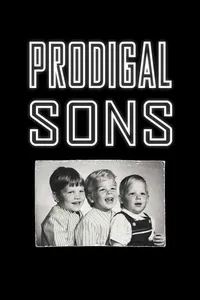
The first-born son of a farm-born doctor and his schoolteacher wife, Montana son Paul McKerrow was tenderly beloved. He and his brothers’ creativity expressed itself in goofy, violent, drag-dressed movies from childhood. In high school, his parents took jerky, nosebleed-seat videos of his quarterback glory. From the football field, one can see where he had his first kiss, in the bleachers. The yearbook glows for him, his class’ valedictorian, voted “Most Likely To Succeed.” After graduation, he was too big for Helena. He left — and never returned.
In his place, pretty blonde girlfriend in tow, flying in from New York City for his 20th high school reunion, where “Prodigal Sons” begins its narrative, is Kimberly Reed, the woman Paul McKerrow always saw when he looked in the mirror.
Amazingly, this fascinating story isn’t even the most interesting part of the tale.
This is about sons, remember. Plural. Marc, the family’s first son, was adopted. Then came Paul-now-Kim, tall and stylish, comfortable and poised, tousled hair in an upknot, like a softer Melora Hardin. Then came Todd, now an architect in San Diego — and gay. Dad has died. And Marc is about to find out that his grandfather was Orson Welles. Yup. Really.
What separates “Prodigal Sons” from other documentaries with fascinatingly bizarre subject matter is its sense of alternating immersion and sparsity. Reed knows she doesn’t need to overcompensate with explanation. She can just set up the camera and ask the right questions — she’s not just an expert on her own family, she’s wicked smart and has a keen eye for editing.
The audience just sits, an observant friend from out of town, on the spare chair in the living room as a family argument, with Marc as the aggressor, escalates into a police-involved affray (“You know what I would have done?” a family friend, a sweet old chaplain, asks Marc. “I would have decked you.”) or in the passenger seat in the van as tensions mount inside and gorgeous wilderness and pink light pours by outside.
In the aftermath of what we soon realize is just one in a string of heart-breaking confrontations with the troubled Marc, Reed drives down a winter-dark street of Christmas-lit houses and recalls the tender, almost non sequitur, “When you’re a quarterback, you learn, right after you throw a pass, to go limp, because you’re about to get hit.”
Reed could have easily made the film just about herself, her difficulties, her struggles. Certainly the harsh Biblical tirades her brother lobs at you, the tipsy, ill-informed comments some classmates make at her reunion, are only scratching the surface of what she dealt with since beginning her transition — a story that hasn’t been told nearly enough in public. (And some of them have surprisingly deep things to say: “All of us are changed,” one woman says, looking around at the class of ‘85. “We’re not what we thought we’d be.”)
Instead, she holds a glass up to what turned out to be her older brother’s far odder story, but it acts as a mirror. There’s perhaps no better way to showcase Reed’s character as a sibling — or her talent as a storyteller.
At one point, the lunkish, poorly dressed Marc — who died in June — with his foam Croakies sunglasses holders and a scar from where part of his brain was removed after a nearly deadly car crash, hunches at a piano and pours out a wandering, improvised instrumental ballad. It’s before he’s figured out who his mother was, who her parents were, and that his great-grandmother was a famous pianist. It’s beautiful. Strange. He looks up at the camera, his face suddenly intelligent and childlike, and says, “I don’t know where it came from.”
Ashley O’Dell reviews movies that aren’t in theaters anymore.