Rudo y Cursi
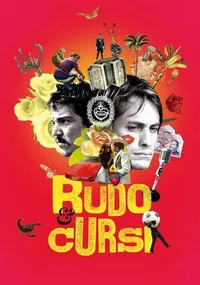
“Rudo y Cursi” is the engaging, funny, sad, true-to-life story of two young, rural Mexican brothers with dreams of
unattainable stardom (one, of the soccer field, the other, behind a microphone and an accordion) whose lives picking bananas and drinking beer in the dusty family compound are changed by a chance meeting with a rich foreigner, Batuta, played by Guillermo Francella, who happens to be a soccer recruiter with music industry connections.
Brothers Alfonso and Carlos Cuarón (“Y Tu Mama Tambien,” “The Motorcycle Diaries,”) again pair the dreamy Gael García Bernal and Diego Luna as the brothers, Tato and Beto. Patron Batuta initially sets them up, one after the next, in a tiny, four-man apartment with a week’s stock of Cup O Noodles (“They’ve got shrimp in them,” Batuta points out, to their amazement). Their almost overnight success on the field results in an echoing mansion and money for cocaine, gambling, obscene SUVs, the attention of a hot, as-seen-on-TV girl and the
rough-boy/nice-boy nicknames of the movie’s title.
Such a rapid rise to fame would be a snooze without some conflict, which arrives, as it often does with fickle fame, in the form of too-fickle love, too-alluring addictions, swollen egos and trouble at home, where their sister has become the bride to a big cartel drug lord moving into the area (his character is a completely benign — if
heavily armed — benefactor for the village, which, contrasted with the cartel’s 3,000 murders in 20 months 40 miles away in Ciudad Juárez, leaves a sick taste in the mouth). And, playing on different soccer teams, the brothers are set up for the expected ‘mano a ‘mano face-off in the big final game, with the aforementioned circumstances tangled in its outcome — and a sea of violently slavish hooligans in the stands ready to slaughter one of them for failing his team. It’s like “A League of their Own” with way more swearing.
The swearing thing is the tip of what really blemishes the American version of the movie, which had a whole thick slab of rowdy nuance and hilarious texture stripped away in translation. When an audience has to read the subtitles, you can’t include every last “pinche” (damned stupid, or cheap) and “buey” (dude) and the 500 variations on the versatile cousin of our F-word, the CH-word. But the translation doesn’t just slash, it burns.
Example: an opening joke among banana plantation workers, “What’s the difference between a banana picker and a donkey?” has the nonsense punchline “The donkey’s well-hung.” The Spanish answer is, “because banana pickers have Chiquita,” as in the brand and, well, chiquita. Tiny. That’s easy to figure out. The hot bimbo Cursi falls in love with? She calls him “Papi” constantly, like “Daddy” with a touch of “Big Man.” But there’s no translation given.
Batuta narrates. From his accent and dialog, it’s obvious that this story about Mexico is being told by an Argentinian. Someone decided that a flashy Argentinian, to a pair of rancheros, comes off like a straitlaced, tea-with-the-pinky out London businessman from 1962. True, to an extent, as they lean on an archaic verb conjugation some see as ancient as “thou.” Instead of “orale, pues,” they say “dale, che.” Every other word out of their mouth is “boludo,” like “dude” or “man” or, in Spain, “tio.” The translators change “boludo” to, variously, “wanker,” “prat,” and “mate” and throw a translation of “policia” to “bobbies” just to complete the bogus Anglicization. Left alone, “boludo” would have made sense. And while the more guttery “pelotudo” changes to the OK “ballbreaker,” regional interjections about the private parts of nuns, mothers and whores turn into stale
American F-bombs, dried Hormel chipped beef standing in for machaca.
The result is frustrating, distracting and off-putting, like eating roasted green chiles with a stuffed nose. I saw this weekend that the Village Inn Pancake House has started offering menudo. I can’t imagine the Village Inn menudo bright red and burning with good spices, thick with chewy tripas, chopped onions and limes and cilantro and with a pig’s foot floating in the middle. “Rudo Y Cursi” is a damn fine film, and it’s a testament that its spirit and ride come across without those ingredients. But it would have been better with the “boludos.”
Ashley O’Dell reviews movies that aren’t in theaters anymore.