State of Play

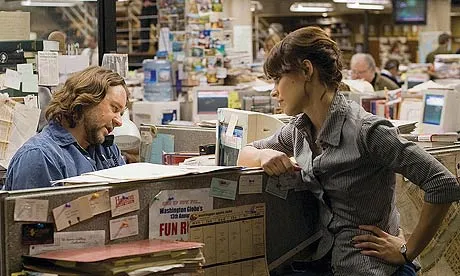
“State of Play” started out as a BBC 6-part miniseries and has since been transformed into a movie starring Russell Crowe as intrepid, scruffy, old-school Washington, D.C. journalist Cal McAffrey, investigating the death of a girl on Congressman Ben Affleck’s staff. Rep. Affleck, who is heading up a very important committee looking into outsourcing by “PointCorp,” a.k.a. a thinly disguised Blackwater/Xe is McAffrey’s long-time chum from college, so even though McAffrey (and his sidekick, Della, a younger reporter he’s never met from the newspaper’s shiny Internet division) work hard and earnestly digging and picking and unraveling at that thread until all of the city is laid out before them, it’s not much of a coup to bag Affleck, the center of the story.Both the 2003 BBC miniseries and the 2009 American movie are excellently done, exciting stories with nearly entirely competent, realistic casts (although the cutesy Rachel McAdams, as Della in the American version, is more suited for a job folding sweaters in an Urban Outfitters, especially compared to the luminous Kelly MacDonald, of “Trainspotting” and “No Country For Old Men”). The story is well told. The dialog doesn’t smack of snarky L.A. writer’s rooms, sarcasm and hipness clogging the air like cigarette smoke. The plot moves forward with a natural feeling current, without sudden dei ex machina marionettes dangling down with anonymous tips or clues whenever the writer seems to have run out of ideas. Best, professional British TV writer Paul Abbott’s story holds its own in both versions, without seeming rushed and shallow being told in two hours or overwrought and tedious in six.
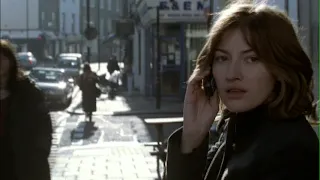
However, the world both exist in, despite the killings and the upset families and the broken jaws and nearly everyone’s proclivity to too many drinks, is a bit too wonderful.Depending on the version, “State of Play“‘s investigation takes two to five reporters working full time for weeks on only this story, backed by a wonderfully ferocious editor and an expense account enumerated at £60,000 in the BBC version, not to mention the cost of confidentially recording every conversation with a hotel-sequestered source, with methods that would make the police and the journalists from HBO’s “The Wire” drool — or smash something. Plus a transcriptionist.
In criminal investigations, this is called the “CSI Effect,” after the maudlin TV show, meaning basically that — to take an example from a comic mocking the show — an investigator can zoom in on a grainy CCTV tape to a clear license plate identifying a suspect, then zoom in to the screwdriver marks on the plate screws to identify his weapon. Finally, one last zoom into a reflection off that plate screw reveals, ridiculously, the suspect stabbing someone with the screwdriver. Both “State(s) of Play” perpetuate a similar perception that even thesmallest amount of a journalist’s suspicion, even on a case as small on their horizon as the random killing of a small fry in a city like Washington, D.C., or London, is enough to prompt the kind of no-holds-barred investigation and accounting that only stops upon exposing the blood-stained hands of those in the highest levels of power.The perception that an army of hundreds of James Bonds with notepads exists at every media organization with the time, money and connections to willing gossipers in every branch of government, every phone company, every hospital and every police force necessary to shake down everyone from the oil industry to a city hall staffer using her city-provided Ford Taurus on 100 miles unauthorized personal trips every month.Getting the work done without all this flash is what made “The Wire” (written by a former reporter) so compelling and true. One wishes the circumstances of “State of Play” were the rule, rather than the exception. Were the characters in “State of Play” able to get the final story out under normal constraints, that might be a story no onewould believe.
Ashley O’Dell reviews movies that aren’t in theaters anymore.