Stranger Than Fiction
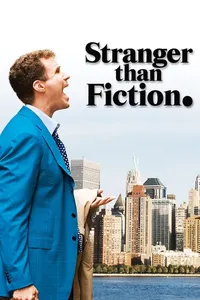
Who pulled this out of the slush pile?
Imagine the pitch session for “Stranger Than Fiction.” Okay, so there’s this boring IRS agent, whose boring life is being narrated to us, the audience. But one day, he hears the narration too and realizes
he’s actually a character in a book written by a famous, neurotic, chain-smoking, furrowed-browed British author who’s behind the book.
She wants to finish it, but knows that to finish it well, Crick must die! Can Crick reach the author in time to save his life?
Oh yeah, and, uh, give Maggie Gyllenhaal some tattoos and make her an anarchist baker who doesn’t like to pay taxes but who falls in love with Ferrell. Bam. So much schmaltz you could choke a yak.
Will Ferrell, as Crick, phones it in on this one, like the overachieving student who bombed his debate on Dickensian foils because he stayed up till 4 a.m. snorting Ritalin to finish his research paper contrasting punctuated equilibrium with phyletic gradualism the night before. He acts like he realized a little too late after signing on that “Stranger Than Fiction” is a bunny rabbit in a pair of glasses and a Trix cereal shirt — cute and fluffy trying to pass as smart and self-aware. Underneath, the movie makes no sense, but in a lazy way, not in a pedantic, lost-in-space-a-la-Mystery Science Theater 3000 (“If you’re wondering how he eats and breathes and other science facts / Then repeat to yourself, “It’s just a show, I should really just relax”) way.
To be fair, the laziness is inevitable. The author directing Crick’s life, Karen Eiffel (Emma Thompson) is supposed to be, as her puke-inducingly irritating name implies, a tower of the literary world. But her prose (“The sound of the Manila folders rubbing together reminded Harold of a deep and endless ocean,”) is supermarket book section dreck at best, and so purple Prince could make liner notes out of it.
It’s the medium within a medium problem, the “That Thing You Do” conundrum: the premise of “That Thing You Do” was to tell a story about a 60s rock band that everyone fell in love with for a brief,
shining moment. The problem is that we never fell in love with that band in the 60s because they never existed, and we have no cultural wellspring of adoration to draw upon. Meaning, essentially, that bands
or authors invented by screenwriters are pretty uniformly lousy because the screenwriters aren’t novelists or band producers. They’re screenwriters. It’s hard enough to write a good movie, let alone
create a brilliant author and a brilliant collection of work for her to go in it.
To throw into the mix literature professors who specialize in fictional authors (Dustin Hoffman plays one in “Stranger Than Fiction,” one who, he says, once taught a class on the phrase “little did he know” and who has since moved on to expounding on Lawrence Durrell’s Alexandria Quartet) makes the whole meta undertaking more uncomfortable than Kirstie Alley trying to fit into her old Cheers
power suits after a couple of Hardee’s Monster Thickburgers.
And while it’s nit-picky to complain about cliche titles, the fact that “Killing Harold Crick,” the working title, was axed, speaks volumes about this movie’s gutlessness. You know what’s stranger than fiction? Professor Actual Factual Bear from the Bearenstain Bears coming to life and terrorizing a 7-11 with a machete in search of trail mix. Barack Obama and Hilary Clinton challenging each other to a dance-off for the Democratic nomination, only to be devastated by Bill Richardson’s jaw-dropping one-man fox-trot in sequined spats. Michael Jackson’s son Blanket turning out normal.
This, on the other hand, is a story about a man named Harold Crick and his wristwatch: all the groggy after-effects of Ambien, but without the fun hallucinations. Save yourself eight bucks and spend an
evening watching the thermostat.
Ashley O’Dell reviews movies that aren’t in the theater anymore.