The Grapes of Wrath
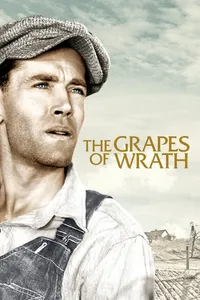
“The Grapes of Wrath” is a gripping book that begins in dust and ends in death after many dark miles, but if you showed a classroom the 1940 movie version of it, 80 percent of them will waste the time you gave them to check their Facebook newsfeeds on their phones.The story? A young man, played by Henry Fonda, looking sharp and handsome and angry, has just gotten out of prison for homicide, discovers the Dust Bowl and flees at the last minute with his family, for peach-picking prospects in California. Well, know how everyone in the media has been repeating the line about the recent recession being “the worst economic crisis since the Great Depression”? That’s the truth. But it’s also kind of like Bill Hicks’ line about it being reported that Iraq, during the first war there, had the “fourth largest army in the world. Yeah, maybe, but you know what, after the first three largest armies, there’s a real big ****ing drop-off. The Hare Krishnas are the the fifth largest army in the world, and they’ve already got all our airports.” After watching this movie (and really, remembering any conversation you had with your grandparents about making food last, straightening bent nails, picking up pennies, using cold water and putting on an extra sweater) one really does feel that, as bad as times have been in recent years, they really don’t approach the level of children with their bellies extended, dying of starvation, or groups of men being truncheoned down dead just for talking about organizing, or families seeing their houses knocked flat by a Caterpillar, or loading a dozen of themselves into a jalopy to travel thousands of miles on the gullible hope they’ll be able to take advantage of 800 fruit-picking jobs in California.But the unrelenting tone of the whole thing, while obviously appropriate, makes the dusty, interminable trip along Route 66 seem to take just as long as it probably took in those days. There’s a preacher who’s becoming sort of a crazy atheist — a character that would be shocking in a movie today. Much like our housing crisis, the land crisis of those days, with families being kicked off because their acres weren’t producing, is portrayed as just as random and fickle and cruel as today. The decisions people make about whether to help another family on the side of the road, or haggle with ragged children over the price of a loaf of bread seem at once both as barbaric as in “Les Miserables” while also too familiar for comfort.One only has to read “Cadillac Desert” or watch “Chinatown” to know that all that was promised in California (at least all that required water) was far from what it was cracked up to be — to the Joads or to the farmers whose citrus scented the main drags in Pasadena Perhaps what seemed so depressing about the movie was that, afflicted with tunnel vision, I was hoping there would be some “Wizard of Oz” moment where we would see what the Joads saw when they pictured California in their mind. There’s a short shot where they see a farming valley, and the lines on their faces disappear for a moment, but it’s too brief as to be statistically insignificant. I’d like to think that’s what it is, but the whole thing is just too sad for words, and that strikes at the core of what it is to be American, that hope that as long as one stays decent and moving and hard-working and willing they will survive. And also, there’s just the unrelenting nature of watching a poor family of 12 try to keep everyone fed and sane.
Reading “The Grapes of Wrath,” one at least can enjoy the poetry of the words that, on film, sound at times like a melodrama in the early days of talkies, which it, in a sense was. There might have also been the sense that, there and then, in 1939, the situation really was that dire — and it was — as to demand a movie of “Grapes of Wrath” shock people into attention. Things aren’t fantastic in America these days. A lot of people are relying on soup kitchens and losing their retirement value and living on relatives’ couches. But when was the last time you fed a wood stove with your ancient postcards and packed your children and elderly off to pick grapes and oranges? Maybe that’s just being naively hopeful. And maybe that quality is what makes “Grapes of Wrath” hurt so much.
Ashley O’Dell writes about movies that aren’t in theaters anymore.