The Living End
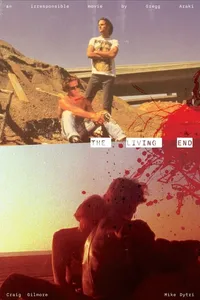
Another cinematic middle finger, albeit one not nearly as enjoyable, is “The Living End” (1992), directed, written, shot and edited by Gregg Araki, the pessimistic swan song of two HIV-positive gay guys in Los Angeles in the hangover of the sexual revolution.
It’s apparently so common to call this movie a “gay Thelma and Louise,” that it’s been noted on Wikipedia. And both movies feature photogenic, gun-toting, suicidal same-sex leads running from the law in a convertible from a world that just don’t unnerstand. But, unless everyone else is watching a director’s cut of that defining chick flick, I don’t remember Susan Sarandon and Geena Davis spending half the movie in bed (seriously, can we ditch the tender-lovemaking-in-various-scenic-locales thing? It’s always either pornographic or a cover-up for a scene that was way too wordy to start out with. Move the dialog to the couch, for Pete’s sake.)
It’s not a leap to imagine that Mike Dytri (Luke) and Craig Gilmore (Jon), men of little success and few prospects, would merely shrug and embrace the prospect of taking their lives into their own hands. Some people, when confronted with that death sentence, would no doubt react in a saintly way, join an advocacy group, maybe march in parades and write guest columns and do whatever it is they mean when they say “outreach.” Others pick the road trip, Jack Daniels, cigarettes, lots of Joy Division and sex on the beach whenever it strikes their fancy. At one point, Luke taunts Jon for wanting to go home: “Just remember to have sex in a plastic bag and don’t plan anything too far in the future.”
Despite many valiant attempts to keep things on the comedy side of “dark comedy” (if your definition of that includes “Why don’t we go to Washington — blow Bush’s brains out? Better yet, we could inject him with a syringe of our blood. Bet they’d have a magic cure by tomorrow” — because like it or not, no one writes like that anymore) the movie is almost drowning in unease. For most of the movie, brains on the wall seems like it’s only a few seconds away. Unluckily for the movie, it’s a fossil, a remnant of an age when the “safe sex” movement was only part of the collective unconscious of 8-year-olds.
A good thing, yes, that condoms are roll-your-eyes obvious these days. These days we face not being slapped in the face by a fatal disease, but picking intentional unsafe sex as some kind of a fun option. In July, Eric Leven wrote on Bilerico.com, “People know about safe sex and condoms and the risks associated with unsafe sex, it’s just that people are choosing not to have safe sex.” We once were found — and now we’re lost. Maybe it’s time for someone to revisit the American sex-death melodrama, and find out why.