The Man With the Golden Arm
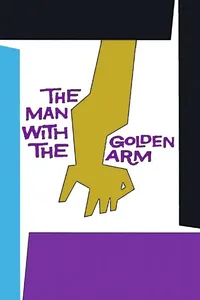
Remake this movie. Now.
There’s absolutely nothing wrong with “The Man With the Golden Arm” — it’s so well shot, well cast, well scored, and jaw-droppingly, edgily perfect you wonder how it got made (oh yeah, it was because Frank Freaking Sinatra starred in it, so they were able to get away with giving the MPAA ratings agency the middle finger rather than make a moralizing, unrealistic, D.A.R.E. predecessor of a freak-out flick). (Probably the worst thing about it is Kim Novak, and when you’re complaining about a bombshell being too bombshelly for a movie about junkies and hustlers, you know you’re scraping.) But people like the weekend ritual of going to the movie theater, even if the only thing there is some remake of “The Three Musketeers” with lasers and Milla Jovovich in 38th century bra technology. People will sit in front of anything. Oh, you remade “Footloose”? You took “Lion King” and worked some computer voodoo on it so it looks like it’s 3D? Yeah, I’ll sit through that again for $12 a head, so that on Monday I can participate in the following scintillating conversation with my co-workers: “You do anything interesting this weekend?” “Eh, the wife and I went out on a date, went to go see that Ashton Kutcher moviewhere he stars as a bohemian shoeshiner who meets and looks after a young African refugee in Le Havre. In 3D.”
Caveat: At the time of writing, I am deathly ill, either from bird flu or the side effects of a nasal Live Attenuated Influenza Vaccine, including runny nose, nasal congestion, cough, chills, tiredness/weakness, sore throat and headache. I want to jump out a window — but not as much as Sinatra in “The Man With the Golden Arm.” For, you see, Sinatra, as Frankie Machine (what a name!) is a junkie in the early 50s who’s just gotten out of jail — clean, motivated to be a jazz drummer and stay away from the Chicago thugs who sucked him into the crime slime he took the rap for years ago.
“I’d rather chop my arm off’n let him touch it,” Machine mutters after learning his old pusher is looking for him, just seconds after he gets off the bus from prison, barely making it into the neighborhood beer hall, so old-school it features countertop bowls of hard-boiled eggs to soak up the booze.
It’s not just criminal scum who feel they have a claim on his soul, either. Machine has a golden-haired young wife, Zosch (Eleanor Parker, a.k.a. Capt. Von Trapp’s original love interest, Baroness Elsa Schraeder, in “The Sound of Music”) who is confined to a wheelchair up many impassable flights of stairs in a one-room apartment back when “accommodating the disabled” meant “carrying people up and down the steps.” Zosch, as beautiful as she is needy (she keeps an album labeled “My Scrapbook of Fatal Accidence”) has been crippled for three years after a car crash Machine knows was his fault, which she feels gives her the license to demand he go back to his old lucrative gig as an illegal card dealer and give up his silly drum dreams so that he can stay home and take over from the quack massaging her legs and ordering her to give up eating red things. You know, for her blood.
Except she’s not actually disabled. Soon after he arrives home, and we think he’ll be the one building back his credibility in the eyes of his loved ones, Zosch climbs out of her chair. She’s fine. It’s Machine who’s trying to be honest and good, and she who is trying to be the schemer — and also the haranguer, concerned he will hook up with Molly (Novak), a level-headed old girlfriend. With such a harpy on his back and an immediate shoplifting charge stemming from his old pal snatching him a suit for his job interview, it’s sadly no surprise that Machine, full of regrets and stormclouds, goes back — runs back, actually — to the needle in his arm (“The monkey’s never dead, Dealer,” his pusher tells him. “The monkey never dies. When you kick him off, he just hides in a corner, waiting his turn.”) and finally to Molly to help him get over it.
Parker plays the whole thing a little too shrill. Novak plays it all too cool. The supporting male characters could be drawn in ink and paint and be full-out Disney cartoon creeps from some anthropomorphic early 20th century mouse or dog tale. It’s Sinatra as junkie that takes your breath away. He’s forced to stay up for almost two days straight to exercise his talent, dealing cards, making him edgy and unable to perform at a drumming audition. His troubled eyes as he throws his drumsticks down seem to be searching for a bridge to jump off of. He was in his late 30s in this movie, but in the parts where he’s hooked on drugs, was able to make himself look older than he often looked in his 70s and 80s. His face took on a slack, dead look, careless — but not in a carefree way — and determined in the most desperate way, his energy able to propel him up a dealer’s stairs, or able to get his sleeve rolled up in half a second, but nothing else. He demands to be locked in Molly’s apartment, and his detox session, with broken chairs and his arms curling up like a burning body, is “Trainspotting”-esque, even without the hip music and creepy rotating-head baby and stretching wallpaper.
It’s easy to think that such a thing was ahead of its time, but think about how many musicians Sinatra himself must have known who tried to kick their own addictions. Sinatra himself was addicted — to staying up late, to not being alone when dawn broke. He used to invite people to late-night parties and tell them to bring their sunglasses, because he knew that by the time he let them go, the sun would be blazing over Vegas.
Were he not so charming, that behavior might have been just as sick as Zosch’s in this movie, clinging and desperate and willing to lie to keep people with her. Luckily, the real Sinatra wasn’t actually like either of the main characters. He was neither a fatally addicted heroin addict nor someone whose codependence made him unbearable and unable to be abandoned. He was a damned good actor — and one whose talent and stubbornness helped keep “The Man With the Golden Arm” from becoming “Reefer Madness” on smack.
Ashley O’Dell writes about movies that aren’t in theaters anymore.