The Reader
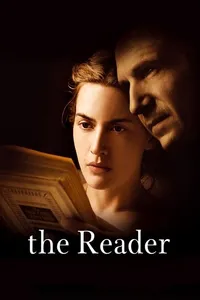
The main character in “The Reader,” Michael Berg (Ralph Fiennes) is a bottle-it-all-up ladykilling lawyer who suffers from a Humbert Humbert-like propensity to falling into the lovelorn summer he was 15. His flashbacks to those months of ponderous silences and alternately cruel and longing gazes so consume him that he nearly arrives late for trial one day, his black lawyer peignoir ruffling like a cape behind him. Heavens.
That summer, we find out, young Michael (played by David Kross, he of Heath Ledger good looks) had the good fortune to fall suddenly, pukingly ill outside the house of Hanna (Kate Winslet) a take-charge, frowzy-haired tram conductress … with a Pilates-sculpted body and the usual sheet-tearing hypersexuality. You wonder how the rattling of the cars over the tracks doesn’t dissolve her into jelly by day.
The two take a lot of baths and he reads her a lot of honors English required books and they go on a “bicycle holiday” and get into fiery fights fueled by an irritating lack of communication. One day, she storms out.
The movie doesn’t really get interesting until the second set of flashbacks, in which Michael is a law student viewing a trial attended and protested by hundreds - a trial of ex-Nazi women guards. Hanna is one of them. At this point, there have been enough flashing, neon signs pointing to her illiteracy it’s obvious that will be the mighty hinge upon which her future will now hang. (Were that not enough, there was also a classroom scene, early on, in which a teacher notes, “the notion of secrecy is central to Western literature.”) Just in case we haven’t understood that, though, at the critical point in the trial, Michael has a convenient little flashback for us of all those “she can’t read!” moments - Hanna pushing a book at him, Hanna looking confusedly at a menu, Hanna biting her lip as she pores over “Pat the Bunny” …
There is a scene in which a fellow student of Michael’s rails against the trial itself, calling it a diversion. As “The Reader” author Bernhard Schlink points out, thousands of people worked in concentration camps, and only something like 17 were convicted. “Everyone knew,” the student insists. “Why didn’t you all just kill yourselves when you found out?” This is the high point in the movie as far as I’m concerned, but we quickly slip back into the turgid - and yes, diversionary - currents of “how tormented must lovesick Michael be?” and “does Hanna’s illiteracy pardon her?” instead of addressing that big point head on. There’s a scene where Michael visits a concentration camp, walking silently among rows of wooden, coffin-width bunks, through the still dripping showers, between storage cages stuffed with so many pairs of shoes.
It’s also curious to wonder if the story would only have worked with a young boy and a female Nazi guard. How repellent would people have considered the film, just on face value, had it been about a 15-year-old girl taken in by an older, seducing male, who turns out to have been a Nazi guard?
“The Reader” had a chance to make a great point, or at least pose a great question about the complicity of the Germans under Nazi power. Perhaps it worked better on the page. But in comparison to plumbing the icky depths of a country’s witness to horror, illiteracy - especially in a “The More You Know,” very-special-episode way - is no center of gravity. In fact, it seems almost cavalierly flimsy, the exact opposite of all those bunks and shoes stacked high and empty.
Ashley O’Dell reviews movies that aren’t in theaters anymore.