The Savages
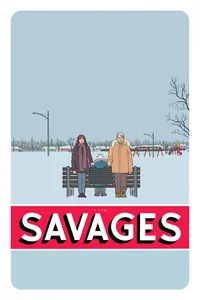
The old man was apparently not a very good father even when he was young, before the Parkinson’s diagnosis, the painting bad words in his own poop, the fading out without a fight. And his poor son and daughter. Wendy, the very lovely Laura Linney, an unpublished playwriter in New York City, with the MFA, doing temp work, joylessly going through the emotions of Yoga Booty Ballet and sleeping with some hobbit-like married guy. Jon, played by Philip Seymour Hoffman (one of my favorite actors — from “Flawless” to “The Big Lebowski” to “Capote” and “Charlie Wilson’s War”) a doctor of philosophy who teaches classes on Brecht.
Here’s why I think you’re supposed to like “The Savages”: their old father, who is now becoming demented and dying, was apparently not a very nice guy, even when he was young. The son and daughter are miserable, but their problems are kind of wacky, or worth a few nervous laughs in the theater. It’s serious, slow, contemplative theater. There’s subtext in the silence.
That is to say, it’s literary fiction on the screen, a magician’s sleeve from which one can pull an endless flurry of colorful silk handkerchiefs. Here’s some subtext about what it means to be alone, and here’s some about mortality, and here’s some about forgiveness, and here’s some about convenient dying and here’s some about what it means to be successful. But you know what? In any pair of talented hands, one could do the same with (to take Wendy’s inspirations) “the work of Jean Genet, the cartoons of Lynda Barry and the family dramas of Eugene O’Neill.” Without having to resort to shots of the married man’s sympathetic dog watching his owner schtupp someone who tries to get out of a family obligation by claiming she’s won the Guggenheim.
Unfortunately, this seems to be the obvious, albeit funnier and more relatable predecessor to Hoffman’s directorial debut, 2010’s “Jack Goes Boating,” which I reviewed last year, thus further solidifying Hoffman’s seeming desire for less Hollywood and more Mason City, Iowa. In “The Savages,” we’re expected to laugh equally at an ugly lie about cervical cancer as well the — dare I say — trenchant (gag) scene where the siblings enter a hospital room to find their father prostrate, an OxyClean commercial the only witness to his fading life.
All this with a musical theme expressed with one of two cheap options: noodling piano plus the plucking of an upright bass, or the twee tiny toy piano. It’s like Linney and Hoffman are in an ad for Abilify, or for term life insurance, or for calcium supplements. (Say what you will about Wes Anderson’s oeuvre, and I have, but at least his soundtracks fucking rock.)
And really, Philip Seymour Hoffman: What happened to ultimate toady Brandt from “The Big Lebowski” and ultimate fat fanboy Rusty in “Boogie Nights”? The relatable nurse in “Magnolia” and the brusque CIA man in “Charlie Wilson’s War” and the drag queen who taught DeNiro to sing in “Flawless”? What the hell happened to Truman Capote?
What the fuck happened to this brilliant idiot?
Like The Savages themselves, “The Savages” is smart but too tired to do anything with it. Even the pretension (Wendy’s play polishing average childhood memories of average physical abuse, Jon’s unsmiling academic treatises) doesn’t rise past the level of unironic, uncomfortable “Prairie Home Companion” diddling. It could have been great, if it hadn’t been defeated first.
“At least you’re not really ending your life in a grand bourgeois setpiece, Mr. Bosco.”
What “The Savages” does well — extremely well — is evoking how a place looks and feels, with both humor and sometimes excruciatingly relatable pain, like a shot of a sunset over a Day’s Inn as an elderly couple in sequins sing halting oldies from the bar. (And wherever they are, Linney and Hoffman, both silent and spot on, show us how sometimes, the only place you can find patience and resilience is in a dead lady’s stolen Percocets, however cheap and temporary that solution is.) Sure, you could bundle your characters up in down coats in Buffalo and show a saguaro cactus in Arizona, but the movie takes time to linger on the in-between-channels sound of static of frozen rain at night on a car windshield in New York, and in Arizona, the white-hot skies over the too-tidy, chlorine-scented Sun Cities, where the golf carts advertise sloth as the gated communities bely fear, and the lawns tell everyone “we’re dying soon anyway — don’t push us or we’ll bring a snow machine in next.” But what’s a sense of place if you’re not really feeling any kind of heat, good or bad, for who’s populating it?
I accidentally found this while trying to find a clip from “The Savages” and it’s too strange not to share: Barbariana: Queen of the Savages, Part 1. All I can say is that I would totally play this video game.
Ashley O’Dell reviews movies that aren’t in the theater anymore. She lives in North Hollywood, near the In-N-Out Burger.