The Social Network
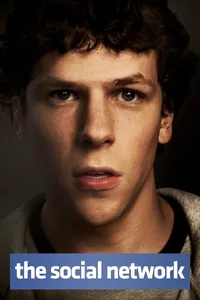
If you love Facebook, find yourself wondering how it became, in many ways, a more useful tool than e-mail, class reunions, parties and exchanging numbers at parties, you will probably love this film. If you love Aaron Sorkin’s snappy dialog, David Fincher’s music-video sensibilities, Trent Reznor’s surprising soundtrack subtleties, and a bevy of good-looking actors — including Justin Timberlake as the guy who founded Napster, you will probably love this film. And if a popular, beautiful girl has broken your heart, and you’re dying to prove you’re better than her, you will almost definitely love this film.
But if you are a female, and your ambitions do not include free appletinis, bathroom-stall oral, swanky cattle-car party shuttles to private clubs of crimson-piped blazers, having coke snorted off your midriff or toppling into a kittenish smush with your girlfriends, then you might feel — not left out, exactly, but more like Facebook founder Mark Zuckerberg’s fictional girlfriend in the opening scene. In the midst of Zuckerberg’s espresso-paced monologue about how he must get into the best boy’s club (“final clubs,” they’re called) he says, weaselly: “If I get in, I’ll be taking you to the parties and you’ll be meeting people that you wouldn’t normally get to meet.” (Then, he calls both her sexual morals and her university’s intellectual rigor loose.) She dumps him. Want to guess how she’ll feel about a friend request from him?
What happens in “The Social Network” is that a jilted Zuckerberg (played by Jesse Eisenberg, a Mikey Cera upgrade who could make the actual Cera obsolete), hoping to create something more “popular” than the fusty final clubs, creates FaceSmash, a site where Harvard kids could rank whose photos were hotter (the real FaceSmash had guys and girls on it, but the movie version ranks only girls). Tellingly, as he’s hunched, furrowed-browed over his computer, slugging beer and narrating a gripping tale about indexes and FAS users and modifying Perl script with emacs, the scene cuts away to shots of the bussed-in girls at the private party, engaging shallowly in some girl-on-girl as they hope to catch the attention of the next Fed chairman. As they are spoiled, Zuckerberg toils.
Then, he creates Facebook, which one-upped MySpace because, in 2003, it was open only to those with email addresses from a few exclusive Ivy Leagues. Two co-conceptualizers later sue for credit, so the story zips back and forth from the late-night coding creation tale to depositions — artfully edited, considering the subject matter: transcripts, coding, a lawsuit brought by a pair of lionish rowing monster twins called Winklevoss (played by the excellent and terrifyingly named Armie Hammer). Soon, there is success. Zuckerberg is the world’s youngest billionaire. You probably know the rest: pokes, invites, events, apps, ads, photos, chat, the wall.
No bones about it, the movie-makers did a great job writing a gripping tale. When you’re paring down the mass of a real story into a fictional one, you keep some details, which emphasize, and take away others, which distract. You embellish other, plausible things, to enhance the theme you’re trying to put across. But unfortunately, even in cracking good movies like “The Social Network,” the embellishments can go too far. What’s astounding, and disappointing, is that the filmmakers thought it was necessary to flatten what really happened into an anti-female righteous revenge of the nerd tale, just to keep it engaging, funny, snappy and, ahem, smart-looking.
“The Social Network” is a good film and tells a great story — but not the part about Zuckerberg’s still-girlfriend, who was with him during the site’s founding, or his sister, a fellow Harvard grad whose joyful video about Facebook’s success, “Valleyfreude,” is still online, or any women with more depth than a shot glass. In this version of the story, the girls — overwhelmingly humanity-redacted groupies — are nothing more than props, living, unfeeling, sometimes bitchy dolls that can be made to kiss and strip and fall into bed, eyes glittering with the prospect of being close to fame. And multi-million dollar settlements don’t destroy that — there’s millions more to be spent.
Like the fictional creator of the Facebook in the movie, the movie’s makers created a success — they knew exactly what their audience wanted.
Ashley O’Dell writes about movies that aren’t in theaters anymore.