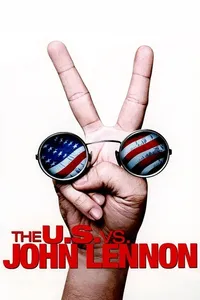
The U.S. vs. John Lennon
Kurt Cobain once sang that just because you’re paranoid doesn’t mean they’re not after you. This is sometimes true. However, it is also sometimes, perhaps even more true, that just because they’re after you doesn’t mean you’ve done anything particularly noteworthy.
The difficult premise of “The U.S. Versus John Lennon,” the documentary about former President Nixon’s surveillance of John Lennon in the ugly post-Beatle years of the early 70s, is that not only was
there at any given time so much heat on John Lennon that a case for mop-top-induced global warming could probably be made, but also that Lennon so threatened the status quo that he was some sort of nouveau Ghandi or Martin Luther King, Jr.
Okay, John Lennon, the first dead and deified Beatle, certainly did some noteworthy things beyond popularizing tinted sunglasses and LSD. He was a founder of the biggest and arguably best rock and roll band in history and in both quality and quantity of both lyric and melody, few could match him. In the Beatles, at least, when he was bad (“Revolution No. 9”) he was still groundbreaking. And when he was good, the girls in the audience wet their seats. He was handsome, a skilled actor, and possessed of a sharp wit. And though his solo career produced more than its share of self-indulgent wretchedness, it
also produced memorable hits like “Imagine” and “Give Peace a Chance.”
He was also the subject, like many celebrities before and since (Charlie Chaplin, Elvis Presley, Lucille Ball, Marilyn Monroe, Princess Diana) of a government investigation.
Funny thing is, in this movie, neither the Nixon administration nor this movie can make much of a case for or against Lennon, and in the end, “The U.S. Versus John Lennon” comes off as a case against the Bush administration so thinly and poorly veiled it would end up on a worst-dressed list in Star magazine. And if you want to make a movie drawing parallels between Bush and Nixon, why not just do that? Why make a movie about John Lennon if that’s not really what you’re after?
Yes, Nixon and Bush both had their own cadre of people so closely watched they couldn’t floss their teeth without someone in Washington knowing what got flicked onto their bathroom mirrors. That doesn’t mean that when we find out about the secret files on Britney Spears in 30 years, that such a discovery will indicate either the malice of the current presidency or the importance of Her Baldness. Beyond a passing supermarket line snicker or gawk, most of America is not deeply impressed by what the spectacularly wealthy and luxuriated classes do, and quite honestly, they shouldn’t be. The movie touches upon the social change furthered by people like Martin Luther King Jr., a Nobel Peace Prize winner who had his house bombed when he dared to further the idea of racial equality. To compare him to Lennon, who spent more time indulging himself in therapy and concept albums as he did doing
any social work, is like comparing Mother Theresa to Princess Diana: it can be done, but people deep-fry Twinkies, too.
Being an American involves a certain grain of questioning authority, to, as the late gonzo journalist Hunter S. Thompson wrote in 1979, “consider the paradox of a nation that has given so much to those who preach the glories of rugged individualism from the security of countless corporate sinecures, and so little to that diminishing band of yesterday’s refugees who still practice it, day by day, in a tough,
rootless and sometimes witless style that most of us have long since been weaned away from.” But celebrities risk little by encouraging us to save Tibet or to cry tears of red white and blue at the sight of a Chevy truck.
It is not an impressive thing when rock stars with more money than most African nations choose to throw a few million away on some monument to social justice, when they choose to make a few gestures about how we should all live in harmony. And in the grand scheme of the government, even a few years following around a famous Liverpudlian amounts to nothing more than any administration’s leafing through the pages of US Weekly while waiting for a price check on mangoes. I mean, sure, John Lennon preached “give peace a chance.” Let’s not forget that he also said “I am the egg man, goo goo ga joob.”
Ashley O’Dell reviews movies that aren’t in theaters anymore.