What Just Happened?
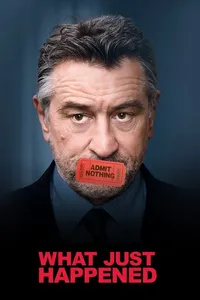
If you could build a town out of the foolish wishes of everyone who thought they could obtain “World of pilules,” “Gorgeous diva drunk!” and “Become liaison master ” by clicking an e-mail, it would be Hollywood. At least, that’s all Ben (Robert De Niro) sees in “What Just Happened?”, based on the book by Art Linson. De Niro is a producer in need of a hit, both to appease social vultures who would sooner bump him off the edge of the tri-fold Vanity Fair group shot and onto the D list. (Someone’s got to babysit those “High School Musical” kids.) For that matter, some “pilules,” a “gorgeous diva drunk” and brushing up on his networking skills wouldn’t hurt either.
Unfortunately, the test audience at “Fiercely,” his latest, foray, doesn’t quite see the artistic merit of the ending, in which Sean Penn’s dog is shot (Sean Penn is also shot, but they don’t so much mind his execution). The express this by filling out their comment cards with naughty words and pictures of an extended middle finger.
It’s Ben’s job to get the director to hack it down in post-production and to deal with his moody, coddled star, Bruce Willis, who has grown a Bill Richardson/Val Kilmer in the last 30 minutes of “The Doors” beard.
De Nero is solid as the lead, which is to say exhausted and disillusioned (as anyone who pays one of his ex-wives $30,000 a month in alimony) and in need of some serious time without his BlueTooth headset stuck to his ear like the blue cocoon of some urban moth. He drives an immaculate Porsche Cayenne and you still feel sorry for him. Suitably, he’s upstaged by his director (Michael Wincott) and Willis, who gets to destroy a costume shop and flip a food table as he screams about “artistic integrity” vis a vis his facial hair.
Thank goodness for Michael Wincott finally getting a role outrageous enough for him (and proving, mind-blowingly, that “Dead Man,” in which Wincott joins a cast including Crispin Glover and Iggy Pop, could have been even weirder). His Australian Keith Richards gets an equally awesome flip-out, after the studio tells him he has to cheer up his ending, pounding his red-fingernail-polished fists on the coffee table in front of him until every cheerful M&M bounces out of its chrome dish. (He downs a handful of Placidil and cranks out a tear-jerking edit worthy of Fred Gipson.)
But it is a cruel, superficial care — at least among those with edit power — that the dog gets shot at “Fiercely“‘s end. The town has become one big hostage situation. The first to get whacked was whimsy. Remember the old “walking between studios” shot of old, to fill visual space during a talky scene? The big rolling backdrops, the camels on a leash and the big potted palm trees wheeled around on dollys? Gone. Even the teenage girls cry when an agent kills himself; they all want to be the starlet whose silk stocking he strangled himself with. In
the original book, Linson writes, “This is Hollywood! There is no relief. No one leaves without a fight, and no one ever thinks he’s too old … And by the way, let’s not be fooled by those of us pretending to leave. No one is going anywhere.”
Linson’s point, in the end, is that the dog matters. Test screenings have their purpose. When 91 percent of the crowd sneers at how you ended the movie with the dog getting a bullet to the head, you’ve just got to change it. And when you have a captive audience, you are obligated to deliver what Kafka called “an ice-axe to break the frozen sea within” and not a Placidil.
Ashley O’Dell reviews movies that aren’t in theaters anymore.