You Will Meet a Tall Dark Stranger
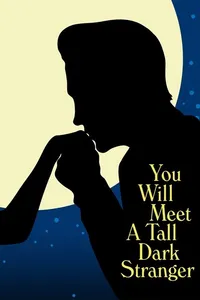
There’s more than a good story about the fundamental compromises people make to be happy in “You Will Meet a Tall Dark Stranger.” There’s the story about the husband (Anthony Hopkins) who’s just left his wife of 40 years to have an end-of-life crisis and fling himself into exercise and raw juice and coltish, lower class blondes. There’s the story of his abandoned wife (Gemma Jones) shellshocked in fingerless lace gloves, sipping Scotch and finding respite only, suddenly, in a psychic she’s spurned her psychoanalysts for. There’s his wife: perfect, professional, dying-to-be-a-mum (Naomi Watts). There’s the story of the manly American member (Josh Brolin) of this London coterie, who’s had one successful novel and dying for a next — enough to steal an unpublished manuscript from a victim of a car crash.
Unfortunately, we never get to hear them, because we’re off on another lovely-looking adventure (should the attractive members of this attractive, artistic couple allow themselves to be swept into the arms of others?) writer/director Woody Allen dreamed up, presumably to impress some gorgeous girl, flex his cinematic muscle in beautiful S-shaped camera movements and his man credentials by staffing the movie not only with a Boccherini-playing, red-dressed neighbor angel (you know Boccherini — yes you do — he wrote that overplayed fluffy Minuet in E Minor, Op. 11, No. 5, they used in a million Warner Bros. cartoons you watched growing up) but framing his flawed yet sterling male characters with beautiful, young, blushing, sylph-like smiling female extras.
It’s “Whatever Works,” but without all the Jewish stuff and more wooden dialogue.
Allen’s characters all talk in complete, theatrical sentences. Not theatrical like a soap opera. Theatrical like there’s no butting in, no rhythm, such that it’s painfully obvious everyone’s memorized their lines and is waiting for the person before them to finish their first line before they say something like, “You inspire me.” And “There is no such thing as predicting the future!” (I’ve now quoted every quotable line in the movie, according to RottenTomatoes.com). That’s not dialog worth writing. That’s filler. IMDB (the Internet Movie DataBase, in case my parents are reading this) “memorable quotes” page on this movie is blank. For comparison, someone thought to make a number of entries on the quotes page for the late Anna Nicole Smith’s sci-bimbo flick “Illegal Aliens.” One of them is, “You can’t miss me. I’m wearing peach and I’m bleeding.”
Aside from Allen’s token “muse” character (here played by Freida Pinto, lithe in vintage-snapped stockings and always wearing something lipstick-red) the women are mostly dumb and senseless, either irrational and shrieking like minor television characters, or dumb and susceptible to the view out a sugar daddy’s window, the flattery of a psychic. But he is much kinder to his men’s flaws — they love too much, and they can’t stop their hearts — which are more akin to the flaws you tell a potential employer in an interview. “I work too hard, and I hold myself to a too-high standard sometimes.” Not the kinds of flaws that elicit the nails-on-chalkboard “Push this chick out a window NOW” one feels when Naomi Watts screeches at Josh Brolin, then tells him she wants a baby. Though everyone is 5-10 percent quirky, regardless of gender, Allen’s always too attached to his male characters to do much to hurt them, not really.
Woody Allen’s contribution to filmmaking, to writing, to comedy, even to half-tabloid, half-well-read dialogs in aspiring and established cities across the country, can’t be overlooked. He knows how to create lovely, bookcase-stacked locations, (knicknacks all just dusted, shrubbery all freshly rained on, windows just scrubbed), turn on some tasteful jazz and let his perfectly styled, effortlessly coiffed, fashionably neurotic cast loose like pull-string toys, wives worrying about everything and men just wishing for a worry-free woman to come
along, ripe for off-feet-sweeping. He creates beautiful places for people of means to have nervous breakdowns. You know. If that’s what you’re into.
The movie ends on a deludedly joyous old couple talking about their past lives. This doesn’t tell me that Allen’s gotten spiritual, or generous and forgiving. To me, it says he wants a do-over. A chance to roll out heavy like he used to be able to, and get it right again.
Ashley O’Dell writes about movies that aren’t in theaters anymore.